<?xml version="1.0" encoding="UTF-8"?>
<?xml-stylesheet type="text/xsl" href="/stylesheets/feed.atom.xml" media="screen"?>
<feed xml:lang="en-US" xmlns="http://www.w3.org/2005/Atom">
  <id>tag:raredisease.nd.edu,2005:/news-events/news</id>
  <link rel="alternate" type="text/html" href="https://raredisease.nd.edu"/>
  <link rel="self" type="application/atom+xml" href="https://raredisease.nd.edu/news-events/news.atom"/>
  <id>tag:raredisease.nd.edu,2005:/latest</id>
  <title>Institute for Rare Diseases | News</title>
  <updated>2026-05-29T11:11:00-04:00</updated>
  <link rel="alternate" type="text/html" href="https://raredisease.nd.edu/"/>
  <link rel="self" type="application/atom+xml" href="https://raredisease.nd.edu//news-events/news.atom"/>
  <subtitle>Notre Dame is committed to understanding, treating, and advocating for those affected by rare diseases through the Institute for Rare Diseases, as well as the Boler-Parseghian Center for Rare Diseases and the Ara Parseghian Medical Research Foundation. </subtitle>
  <entry>
    <id>tag:raredisease.nd.edu,2005:News/182129</id>
    <published>2026-05-29T11:11:00-04:00</published>
    <updated>2026-05-29T11:11:44-04:00</updated>
    <link rel="alternate" type="text/html" href="https://raredisease.nd.edu/news-events/news/ostertag-with-expertise-in-rare-diseases-and-ethics-joins-faculty/"/>
    <title>Ostertag, with expertise in rare diseases and ethics, joins faculty</title>
    <summary type="text">
      <![CDATA[The University of Notre Dame College of Science is pleased to welcome Christopher J. Ostertag, Ph.D., to the faculty, further strengthening the college’s growing leadership in rare disease patient advocacy, research, and ethics-informed science and healthcare education. In July, Ostertag will join…]]>
    </summary>
    <content type="html">
      <![CDATA[<p>The University of Notre Dame College of Science is pleased to welcome Christopher J. Ostertag, Ph.D., to the faculty, further strengthening the college’s growing leadership in rare disease patient advocacy, research, and ethics-informed science and healthcare education. In July, Ostertag will join Notre Dame as the Bill &amp; Lisa Powers Collegiate Associate Professor of the Practice in the Department of <a href="https://preprofessionalstudies.nd.edu/">Preprofessional Studies</a> and Director of Ethics for the <a href="https://raredisease.nd.edu/">Institute for Rare Diseases</a>.</p>
<p>Ostertag joins Notre Dame with a distinctive combination of academic expertise, healthcare leadership, and lived experience as a rare disease advocate. His work will support the College’s Patient Advocacy Initiative and interdisciplinary efforts that connect science, medicine, ethics, and compassionate care. The appointment also reflects Notre Dame’s continued commitment to integrating scientific excellence with human dignity and ethical leadership.</p>
<p>“This role is a true calling,” Ostertag said. “It allows me to weave together my Catholic faith, my journey as a bereaved rare disease parent, and my professional background in theology and health care ethics,” said Ostertag, who most recently served as Regional Director of Clinical Ethics at Intermountain Health in Colorado. “After seven years of serving in ethics and mission integration across three health systems, I am eager to help cultivate the next generation of rare disease patient advocates at Notre Dame.</p>
<p>“I look forward to partnering with patients, families, organizations, researchers, and legislators to improve the lives of all those impacted by rare diseases.”</p>
<p>The <a href="http://patientadvocacy.nd.edu">Patient Advocacy Initiative</a>, anchored by Notre Dame’s interdisciplinary Minor in Science and Patient Advocacy, is one of the nation’s first academic programs dedicated to preparing students to advocate effectively for patients and families affected by rare diseases. The initiative brings together researchers, clinicians, patients, caregivers, industry leaders, and students to advance advocacy, outreach, and education for the rare disease community.</p>
<p>At Intermountain Health, Ostertag led ethics programs across hospitals and helped develop ethics review frameworks for emerging healthcare technologies, including artificial intelligence. Prior to that, he served as Regional Director of Mission Services at OSF HealthCare and completed an ethics fellowship with Ascension.</p>
<p>Ostertag earned his doctorate in theology and health care ethics from Saint Louis University, where his dissertation, completed with distinction, examined prenatal diagnosis, parenthood, and disability through the lens of Catholic healthcare ethics. His scholarship and teaching focus on bioethics, disability, rare disease advocacy, Catholic social thought, and the ethical dimensions of healthcare decision-making.</p>
<p>Ostertag’s connection to patient advocacy is deeply personal. He and his family became advocates within the rare disease community following the diagnosis of their son, Hans, with Zellweger spectrum disorder, a rare peroxisomal disorder. Peroxisomal disorders are genetic conditions caused when broken or missing peroxisomes—the cell’s “recycling centers”— do not break down toxic fats, causing damage to the brain, liver and nervous system. Through that experience, he became an active leader in advocacy and outreach efforts, serving on the board of The Global Foundation for Peroxisomal Disorders and participating in national rare disease advocacy initiatives.</p>
<p>In recent years, Ostertag has engaged directly with Notre Dame’s patient advocacy community, including participating in the University’s Rare Disease Patient Advocacy Summit, where he spoke about the importance of keeping the whole patient and family at the center of care.</p>
<p>"Chris brings an extraordinary blend of intellectual rigor, professional experience, and compassionate leadership to Notre Dame," said Barbara Calhoun, MSN, RN, PNP, the Reisenauer Family Director for Patient Advocacy Education and Outreach and the Director of Minor in Science and Patient Advocacy. "His expertise in ethics and patient advocacy, combined with his personal commitment to the rare disease community, will enrich our students’ education and strengthen Notre Dame’s mission to serve patients and families with dignity, empathy, and hope."</p>
<p>In his new role, Ostertag will contribute to teaching, mentorship, and program development connected to patient advocacy and ethics, helping prepare students to become thoughtful leaders across healthcare, science, policy, and industry.</p>
<p>His appointment further advances Notre Dame’s broader vision for the Institute for Rare Diseases and the Patient Advocacy Initiative, which positions Notre Dame as a national leader in rare disease research, education, and advocacy.</p>]]>
    </content>
    <link rel="enclosure" type="image/jpeg" href="https://raredisease.nd.edu/assets/660970/christopher_j_ostertag.jpeg" title="Christopher J. Ostertag"/>
    <author>
      <name>Tammi Freehling</name>
    </author>
  </entry>
  <entry>
    <id>tag:raredisease.nd.edu,2005:News/181077</id>
    <published>2026-04-24T12:46:00-04:00</published>
    <updated>2026-04-24T12:46:05-04:00</updated>
    <link rel="alternate" type="text/html" href="https://raredisease.nd.edu/news-events/news/a-rare-calling/"/>
    <title>A Rare Calling</title>
    <summary type="text">
      <![CDATA[Dr. Elizabeth Berry-Kravis ’79 has never shied away from a challenge. From being one of the earliest women to enroll at Notre Dame to her career as a pediatric neurologist specializing in a generic disorder known as fragile X syndrome, she has not only led numerous clinical trials, but has also undergone many trials and challenges of her own.]]>
    </summary>
    <content type="html">
      <![CDATA[<p><strong>Dr. Elizabeth Berry-Kravis ’79</strong> has never shied away from a challenge. From being one of the earliest women to enroll at Notre Dame to her career as a pediatric neurologist specializing in a genetic disorder known as fragile X syndrome, she has not only led numerous clinical trials, but has also undergone many trials and challenges of her own.</p>
<p>Berry-Kravis is a professor of pediatrics and neurological sciences, cell biology, and anatomy at Rush Medical Center in Chicago. In addition, she is the director of the RUSH Pediatric Neurosciences F.A.S.T. Center for Translational Research.</p>
<p>While she wears many hats, the center of her work is conducted in her Fragile X Clinic, which she established in 1992. There, Berry-Kravis studies fragile X syndrome, the most common inherited form of intellectual disability, resulting from an FMR1 gene mutation that disrupts production of a vital brain protein. This causes patients to develop physical abnormalities, developmental delays, learning disabilities, anxiety, and a range of other health issues. Her clinical program works to better understand the patient's condition and take steps towards ultimately finding a drug to treat the underlying disorder.</p>
<p>“Over the years, I’ve gone in a lot of different directions and collaborated with a lot of different people,” she said. “But that is one of the most attractive things about the fragile X field, for me— is the way we all work as a group and try to build upon what the others are doing.”</p>
<hr>
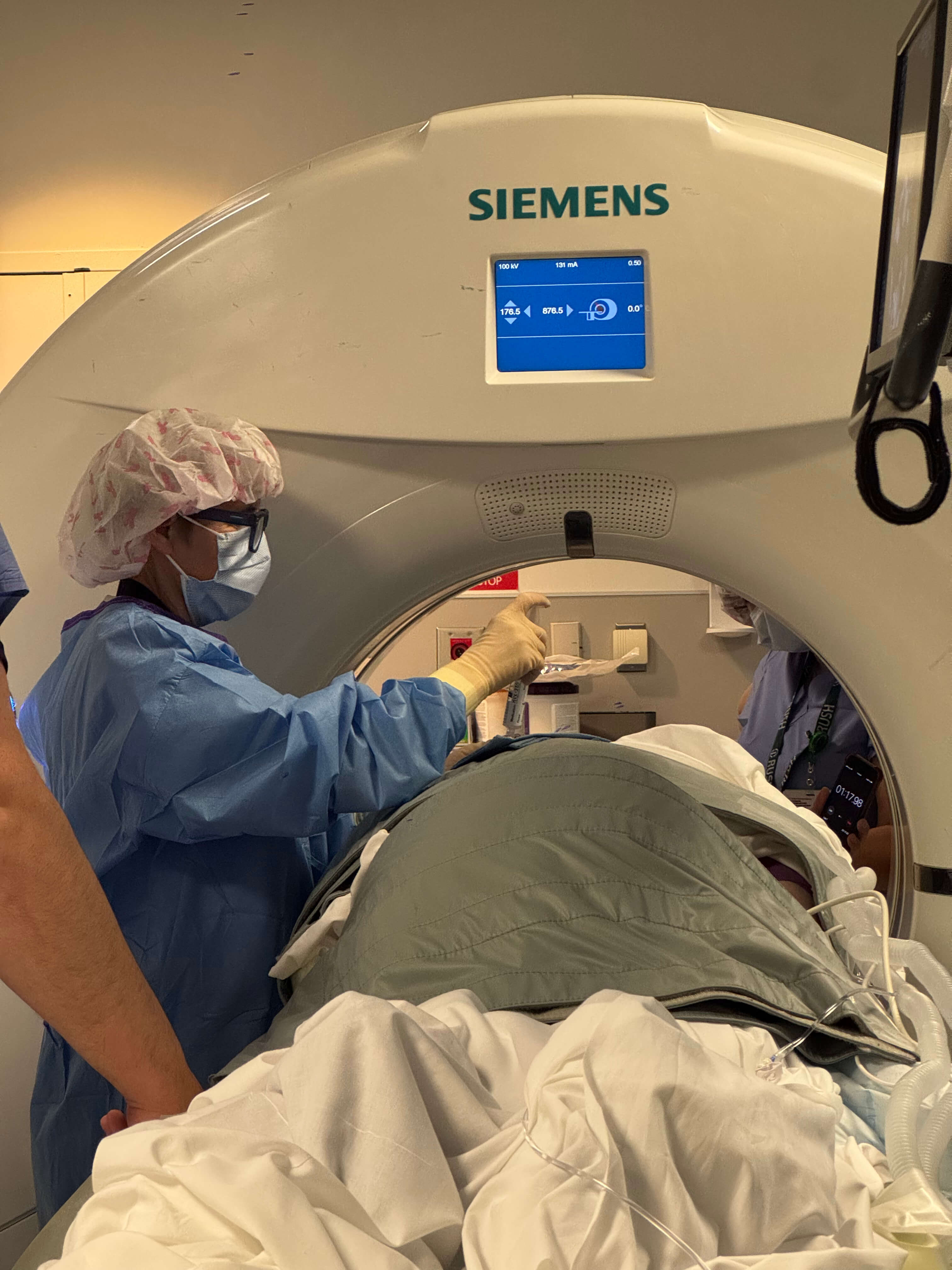
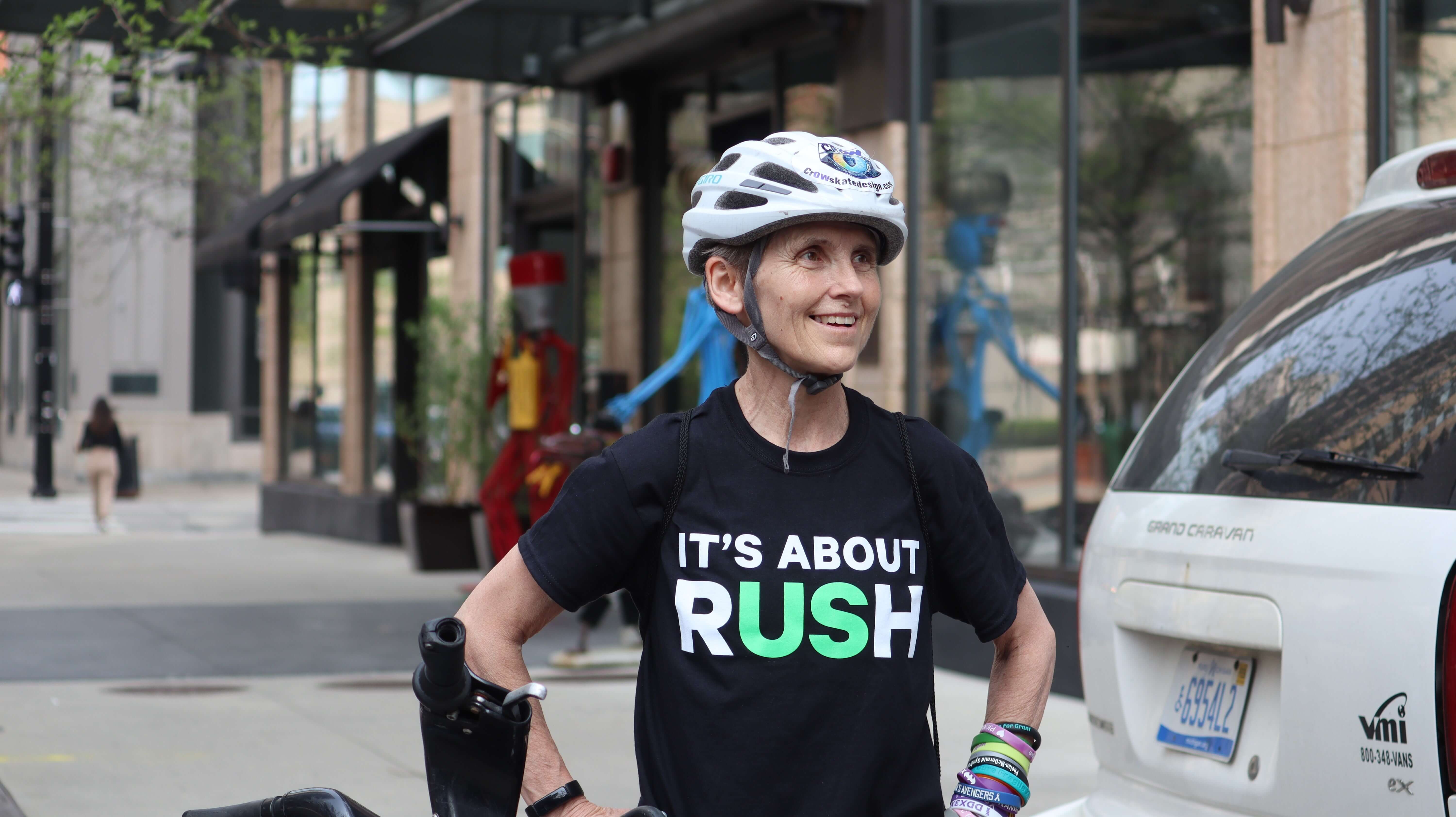
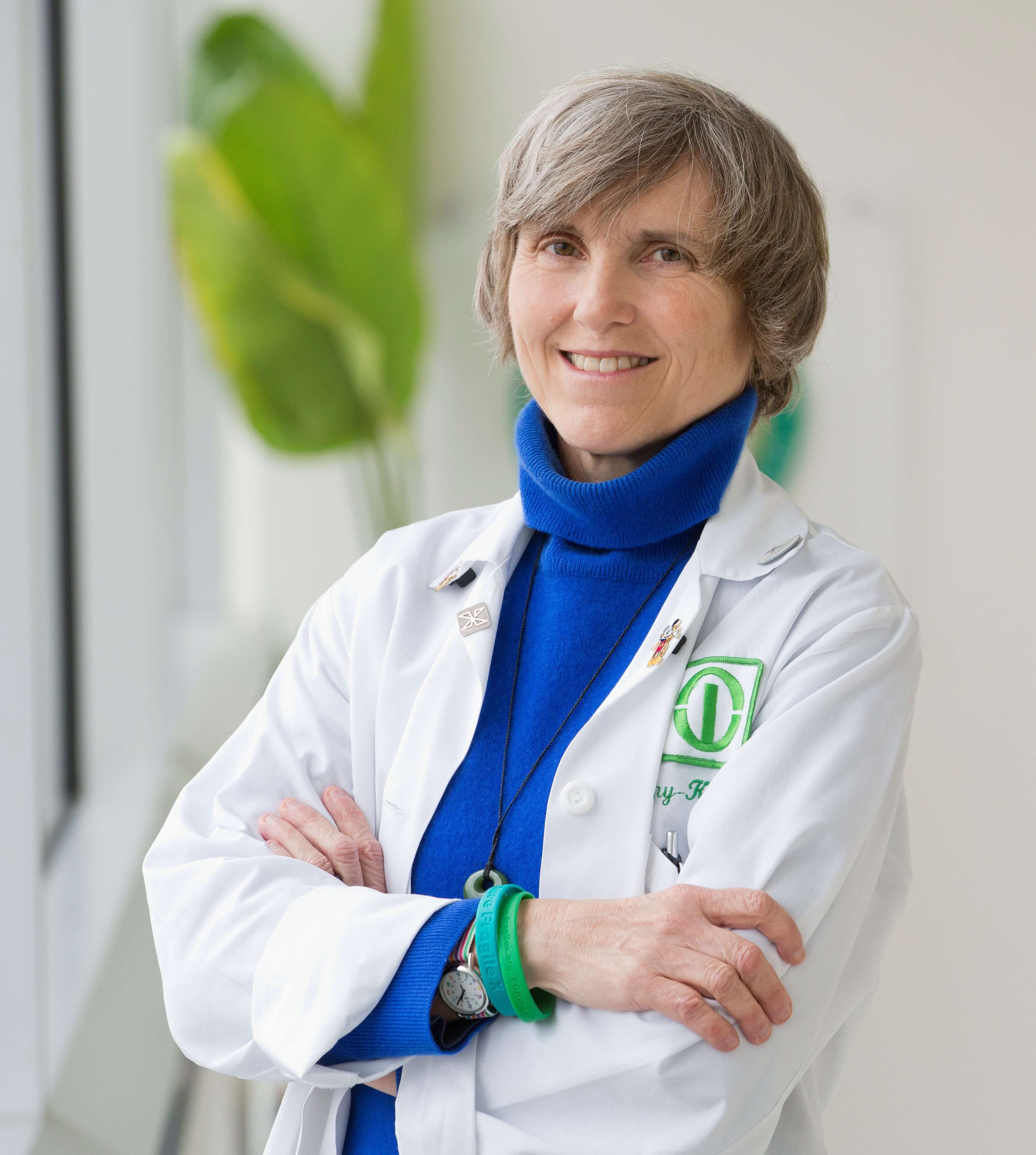
<p><script src="https://raredisease.nd.edu/javascripts/lb.js?v=2023-05-17" defer></script><ul id="gallery-973" class="gallery-lb gallery-973" data-count="8"><li><a href="https://weare.nd.edu/assets/657038/fullsize/img_3671heic.jpeg" title="" data-title=""><img src="https://weare.nd.edu/assets/657038/300x300/img_3671heic.jpeg" alt="A medical professional in blue scrubs, mask, and patterned hair net administers an injection to a patient in a Siemens scanner." width="300" height="300" loading="lazy"></a></li><li><a href="https://weare.nd.edu/assets/657036/fullsize/dave_in_clinc.jpg" title="" data-title=""><img src="https://weare.nd.edu/assets/657036/300x300/dave_in_clinc.jpg" alt="A man in a grey &quot;Sunrise Lodge&quot; hoodie and a woman in a black &quot;RUSH Neurogenetics&quot; jacket smile, give thumbs-up in a clinic." width="300" height="300" loading="lazy"></a></li><li><a href="https://weare.nd.edu/assets/657037/fullsize/ebk_and_belle.jpg" title="" data-title=""><img src="https://weare.nd.edu/assets/657037/300x300/ebk_and_belle.jpg" alt="Smiling woman with short gray hair leans towards a young girl with brown hair; both seated side-by-side." width="300" height="300" loading="lazy"></a></li><li><a href="https://weare.nd.edu/assets/657042/fullsize/img_0554.jpeg" title="" data-title=""><img src="https://weare.nd.edu/assets/657042/300x300/img_0554.jpeg" alt="A smiling woman with short gray hair, in a blue &quot;Fast Athlete&quot; shirt and green shorts, jogs on a sunny residential street." width="300" height="300" loading="lazy"></a></li><li><a href="https://weare.nd.edu/assets/657045/fullsize/bike_ride_ebk.jpeg" title="" data-title=""><img src="https://weare.nd.edu/assets/657045/300x300/bike_ride_ebk.jpeg" alt="Smiling woman in white bike helmet and black &quot;IT&#39;S ABOUT RUSH&quot; t-shirt, wearing colorful bracelets, stands by bike on a city street." width="300" height="300" loading="lazy"></a></li><li><a href="https://weare.nd.edu/assets/657043/fullsize/beautifulpeople1.jpeg" title="" data-title=""><img src="https://weare.nd.edu/assets/657043/300x300/beautifulpeople1.jpeg" alt="Three smiling women and a young boy with black glasses and a blue shirt in a light green room. The boy holds a yellow lion cutout." width="300" height="300" loading="lazy"></a></li><li><a href="https://weare.nd.edu/assets/657041/fullsize/g0026939.jpeg" title="" data-title=""><img src="https://weare.nd.edu/assets/657041/300x300/g0026939.jpeg" alt="Two people paragliding. A smiling woman waves with outstretched arms above a green mountain valley, snow-capped peaks." width="300" height="300" loading="lazy"></a></li><li><a href="https://weare.nd.edu/assets/657044/fullsize/berrykravis_portrait_retouched.jpeg" title="" data-title=""><img src="https://weare.nd.edu/assets/657044/300x300/berrykravis_portrait_retouched.jpeg" alt="Smiling woman with grey hair, blue turtleneck, white lab coat, arms crossed. She wears a &quot;Fragile X&quot; awareness wristband." width="300" height="300" loading="lazy"></a></li></ul><script>document.addEventListener("DOMContentLoaded", function(){var lightbox = new Lightbox({showCaptions: false,elements: document.querySelector(".gallery-973").querySelectorAll("a")});});</script></p>
<hr>
<p>Berry-Kravis could not have anticipated that she would fall into the fragile X field, but from a very young age, she knew she wanted to go into neurology.</p>
<p>In the seventh grade, she read a book on neurosurgery about a child who had a brain tumor. Although she didn’t know much about the field, she was inspired to carve out a career in the neurological sciences.</p>
<p>“That’s what I said I’d do for the rest of grade school and high school,” she said.</p>
<p>A South Bend native, Berry-Kravis attended St. Joseph’s High School where she dove head-first into her studies and enrolled in honors classes that were of great interest to her. In the mid-’70s, her presence in those classes was notable.</p>
<p>“When I was in high school, in the honors math and science classes, there were way fewer girls than guys. In fact, I believe I was the only girl in honors physics and one of two girls in honors calculus,” she said.</p>
<p>Even though she was among the first cohorts of women admitted and enrolled at the University of Notre Dame, Berry-Kravis was not intimidated. Rather, she found that Notre Dame introduced her to people she could relate to.</p>
<p>“When I went to Notre Dame, I met a lot of other women who were like me. I didn’t really have that experience in high school,” she shared. “It was nice to be able to meet people that had similar interests in my dorm and so forth.”</p>
<p>She initially chose to attend Notre Dame because it was the most cost-effective option—her father, William B. Berry ’53, ’57 M.S., had been a professor of electrical engineering at the University. However, she also came from a long family line of Notre Dame graduates, which made it feel like the right fit.</p>
<p>While a student, she lived in Farley Hall and was involved with athletics, from basketball to running.</p>
<p>“I was on the Notre Dame women’s basketball team in its second year of existence, when I was a freshman. They weren’t recruiting scholarship athletes—that should be clear,” she laughed.</p>
<p>After she was cut from the team for missing practices for her lab classes and because new recruits made the quality of play higher, Berry-Kravis continued running on the track and cross country teams. Since the end of her sophomore year she has kept her hobby up, running four miles on weekdays and six on the weekends. However, it was really from her passion as a chemistry major that Berry-Kravis began paving her way during her undergraduate years.</p>
<p>The University had just launched its biochemistry concentration, which allowed her to take various classes in preparation for medical school. She also conducted research while a student and was invited to tutor in chemistry by the late professor Emil T. Hofman ’53 M.S., ’63 Ph.D.</p>
<p>“I had the whole chemistry course memorized,” she said. “The volume of information in medical school is much larger than the volume in college, but the difficulty of information I did not think was vastly different.”</p>
<p>After Notre Dame, Berry-Kravis was accepted into University of Chicago’s competitive Medical Science Training Program (MSTP), a six-year program where she completed her medical degree and Ph.D.</p>
<p>After she finished medical school and her pediatric residency, which she’d also completed at the University of Chicago, Berry-Kravis soon found herself stumbling into the work of fragile X.</p>
<p>Early in her career, she studied a rare genetic disorder called pseudohypoparathyroidism, which was known to affect how cells produce a key signaling molecule. Because the condition was so rare, she and her team needed a comparison group and turned to patients with fragile X—then identified by a visible break in the X chromosome, though its gene had not yet been discovered.</p>
<p>What they found was unexpected: the fragile X patients showed an even greater disruption in this signaling process than the group she had originally set out to study. That discovery shifted the direction of her work, leading her to focus on fragile X at a time when it remained largely underexplored.</p>
<p>“In the process of doing this project, I was recruiting patients to my study and was communicating with a lot of families. The families wanted to have a clinic where they could go and that had doctors that specialized in fragile X, so I agreed to start a clinic,” she said.</p>
<p>Around the same time, scientists had identified the FMR1 gene responsible for fragile X, showing that the condition is caused by a mutation that is a repeating sequence in the DNA, which can expand across generations.</p>
<p>Today, Berry-Kravis has the second-largest clinic that specializes in fragile X and she continues to make progress in the field every day. As of now, her clinic and its researchers are making strides towards finding disease-targeted treatments—though they’ve had their ups and downs.</p>
<p>“Rather than treating symptoms, we were trying to treat the whole disease and fragile X was the first example of trying to do that in a developmental disorder,” she shared. “As a result, we thought we knew what we were doing, but we went into it fairly naïve simply because there was no precedent.”</p>
<p>Because this approach to treatment was new, Berry-Kravis and her team were not only testing unfamiliar methods, but also navigating a clinical trial process that had never been done in this way before. Over time, they encountered a range of challenges—from trial designs that did not fully capture the drug’s effects to setbacks with industry partners and shifting company priorities.</p>
<p>While they have seen partial successes, these obstacles have slowed progress toward FDA approval. Still, recent trials have shown promising results and Berry-Kravis remains optimistic that future studies will build on what they’ve learned.</p>
<p>Although the work with fragile X continues, Berry-Kravis’ work in the field has also informed the work of many other rare diseases—one of which hits close to home.</p>
<p>“I’m working on a variety of rare diseases, but the one most closely connected to Notre Dame is Niemann-Pick Type C—the disease that the three grandchildren of Ara Parseghian had,” she said.</p>
<p><a href="https://parseghianfund.nd.edu/">The Ara Parseghian Medical Research Fund</a> (APMRF) at Notre Dame is a nonprofit organization dedicated to finding a treatment or cure for Niemann-Pick Type C (NPC), a genetic disorder that disrupts the body’s ability to process cholesterol. The disease primarily affects children, with most not surviving past adolescence.</p>
<p>At Notre Dame’s 2014 Rare Disease Day, Berry-Kravis met a family whose daughter had been diagnosed with Niemann-Pick Type C (NPC). At the time, her work had focused primarily on fragile X, but she had started a multi-patient compassionate use protocol—also known as expanded access—which allows patients to receive an investigational treatment outside of a formal clinical trial. She was already treating two patients and added the patient she met at Rare Disease Day.</p>
<p>As more families approached her seeking treatment options for NPC, she enrolled many patients not eligible for trials and has treated them for years, some for over a decade, while accumulating data on their progression and survival that now will form the basis for possible FDA approval of the treatment. Throughout these years, Berry-Kravis has collaborated closely with APMRF.</p>
<p>Across all of her work with rare diseases, the health and well-being of her patients and their families remain at the center of her mission.</p>
<p>“We have kids who are alive today because of our work and that’s the ultimate fulfillment,” she said.</p>
<p>For those with similar aspirations, she counsels that the pursuit of such work may not lend itself to much sleep.</p>
<p>“It turns out people don’t really like that answer,” she joked, before adding, “when you’re trying to build your career, find something you can be an expert in.”</p>
<p>In her own career, she found that once she studied one disease, patterns began to emerge across others, highlighting just how essential collaboration is within the medical field.</p>
<p>“Over the years, I’ve gone in a lot of different directions and collaborated with a lot of people. It really allows you to do better clinical research. You can’t keep things in your own space.”</p>
<p>She now has three adult children working in various fields, from teaching to neuroradiology to computer programming for high-speed trading. When people ask her what the future holds, she remains as certain as she was in the seventh grade.</p>
<p>“When people ask me, ‘Are you going to retire?’ I think, ‘Well, what would I retire to do?’</p>
<p>“I’m already doing what I want to do most.”<strong id="docs-internal-guid-8b3ed25e-7fff-caff-a172-2ad25e3dd667"></strong></p>
<p class="attribution">Originally published by <span class="rel-author">Amanda Dempson '26</span> at <span class="rel-source"><a href="https://weare.nd.edu/stories/a-rare-calling/">weare.nd.edu</a></span> on <span class="rel-pubdate">April 21, 2026</span>.</p>]]>
    </content>
    <link rel="enclosure" type="image/jpeg" href="https://raredisease.nd.edu/assets/657471/wearend_drberrykravis_1440x617.jpg" title="Smiling woman with short blonde hair, wearing a blue turtleneck and white lab coat, arms crossed."/>
    <author>
      <name>Amanda Dempson '26</name>
    </author>
  </entry>
  <entry>
    <id>tag:raredisease.nd.edu,2005:News/179591</id>
    <published>2026-02-27T13:15:00-05:00</published>
    <updated>2026-02-27T13:15:30-05:00</updated>
    <link rel="alternate" type="text/html" href="https://raredisease.nd.edu/news-events/news/dave-and-cathleen-reisenauer-make-transformative-gift-to-advance-rare-disease-research-education-and-patient-advocacy/"/>
    <title>Dave and Cathleen Reisenauer make transformative gift to advance rare disease research, education and patient advocacy</title>
    <summary type="text">
      <![CDATA[Motivated by the experience of caring for two children with a rare disease, Dave and Cathleen Reisenauer have made a transformative gift to the University of Notre Dame to establish a rare disease institute within the College of Science — allowing the University to build on its legacy and leadership in the rare disease space.]]>
    </summary>
    <content type="html">
      <![CDATA[<p>Motivated by the experience of caring for two children with a rare disease, Dave and Cathleen Reisenauer have made a transformative gift to the University of Notre Dame to establish a rare disease institute within the <a href="https://science.nd.edu/">College of Science</a> — allowing the University to build on its legacy and leadership in the rare disease space.</p>
<p>The Reisenauer Institute for Rare Diseases will help to bridge the gaps between scientific understanding and the daily experiences of those living with rare conditions, consistent with the University’s Catholic mission and strategic framework. In doing so, it will take a multidisciplinary approach to problem-solving, with connections to the University’s strategic framework — specifically, the <a href="https://strategicframework.nd.edu/initiatives/health-and-well-being/bioengineering-and-life-sciences-bels/">Bioengineering &amp; Life Sciences Initiative </a>and the <a href="https://strategicframework.nd.edu/initiatives/health-and-well-being/neuroscience-and-behavior/">Neuroscience and Behavior </a>subsections of the <a href="https://strategicframework.nd.edu/initiatives/health-and-well-being/">Health and Well-Being Initiative</a>.</p>
<p>In the United States, a rare disease is defined as a medical condition impacting fewer than 200,000 people. However, aggregated across the landscape of the nearly 10,000 known rare diseases, <a href="https://fightingfor.nd.edu/stories/fighting-for-those-with-rare-diseases/">estimates suggest 30 million Americans live with a rare condition</a>; as many as half are children.</p>
<p>“This extraordinary gift from the Reisenauers will enable Notre Dame to more effectively prepare the next generation of educators, patient advocates and researchers in a collaborative effort to prevent, treat and cure rare diseases,” said <a href="https://provost.nd.edu/people/john-mcgreevy/">John T. McGreevy</a>, the Charles and Jill Fischer Provost. “Such important work is central to Notre Dame’s <a href="https://strategicframework.nd.edu/initiatives/health-and-well-being/">commitment to health and well-being</a> as articulated in our <a href="https://strategicframework.nd.edu/">strategic framework</a>.”</p>
<p>Notre Dame’s efforts in the rare disease space began more than a decade ago with the establishment of the Boler-Parseghian Center for Rare Diseases, and continued with the creation of the distinctive <a href="https://raredisease.nd.edu/advocacy-education/minor-patient-advocacy/">Minor in Science and Patient Advocacy</a> program and the <a href="https://patientadvocacy.nd.edu/">Patient Advocacy Initiative</a>.</p>
<blockquote>
<p>“As Notre Dame parents and as the parents of two children with an ultra-rare disease, our hope is that this transformative gift leads to real breakthroughs in the rare disease space, in terms of research as well as patient and family advocacy, support and care.”</p>
</blockquote>
<p>The new institute will build on those efforts but with a fresh approach — one that, consistent with the University’s Catholic mission and values, centers patients and their experiences and aims to make a difference for the rare disease community through intentional integration of research, advocacy and education, guided by a deep commitment to ethical engagement and to honoring the dignity of patients and their families.</p>
<p>To that end, the institute will invest in the people, programs and tools required to achieve positive momentum in the rare disease space, emphasizing scalability, reproducibility, collaboration and cross-functional partnerships.</p>
<p>As a key first step in launching the institute, the College of Science is currently undertaking an international search for its inaugural director with support from the executive search firm Spencer Stuart.</p>
<p>Ultimately, the institute aims to be a beacon of hope for the rare disease community, revolutionizing care by uniting patients and experts to accelerate therapy development, empower organizations and train the next generation of advocates for lasting impact.</p>
<p>“We are deeply grateful to Dave and Cathleen Reisenauer for their extraordinary generosity,” said <a href="https://chemistry.nd.edu/people/steve-corcelli/">Steve Corcelli</a>, interim dean of the College of Science. “Their gift will allow us to unite research, education and patient advocacy in a way that reflects our Catholic mission and commitment to serving the most vulnerable, and to pursue this work with integrity and respect for the families who place their trust in us.”</p>
<p>Cathleen Reisenauer is a member of the Notre Dame College of Science Advisory Council. Dave Reisenauer, now retired, is the former director of digital transformation for Nvidia, the world’s leading artificial intelligence chipmaker.</p>
<p>The couple has three children: Peter, Cayla and Andrew. Peter and Andrew are both Notre Dame graduates and are now practicing attorneys. Peter and Cayla both live with Cori disease/GSD type IIIA, a genetic disorder characterized by the accumulation of glycogen in the body’s cells, leading to impaired organ and tissue function, particularly affecting the liver and muscles. Cathleen is a full-time caregiver to Cayla, who is severely disabled.</p>
<p>The experience of navigating Peter and Cayla’s diagnoses has shaped and inspired their philanthropy, which includes previous gifts to Notre Dame to establish and strengthen the Reisenauer Excellence Fund for GSD and Related Disease Research; support the <a href="https://galvinscholars.nd.edu/">Galvin Science and Engineering Scholars Program</a>; endow the director of patient advocacy education and outreach position within the Patient Advocacy Initiative; and support an associate director for external engagement for the Patient Advocacy Initiative.</p>
<p>“Our experience working with the College of Science in support of patient advocacy has only reinforced our belief in Notre Dame’s capacity to improve the lives of those living with rare diseases,” Cathleen Reisenauer said. “As Notre Dame parents and as the parents of two children with an ultra-rare disease, our hope is that this transformative gift leads to real breakthroughs in the rare disease space, in terms of research as well as patient and family advocacy, support and care.”</p>
<p>Proud graduates of Gonzaga University, the Reisenauers have also made gifts to their alma mater, for both learning and athletics. Recently, they have also lent their support to a program at Nationwide Children’s Hospital, the Reisenauer Precision Gene Therapy Fund, aimed at developing therapies for ultra-rare disorders and engaging with the patients and families affected by these diseases.</p>
<p>For more information, visit <a href="http://raredisease.nd.edu/">raredisease.nd.edu/</a>.<a href="mailto:eblasko@nd.edu"></a></p>
<p class="attribution">Originally published by <span class="rel-author">Erin Blasko</span> at <span class="rel-source"><a href="https://news.nd.edu/news/dave-and-cathleen-reisenauer-make-transformative-gift-to-advance-rare-disease-research-education-and-patient-advocacy/">news.nd.edu</a></span> on <span class="rel-pubdate">February 27, 2026</span>.</p>]]>
    </content>
    <link rel="enclosure" type="image/jpeg" href="https://raredisease.nd.edu/assets/650591/mlc_22525_library_lights_02.jpg" title="Hesburgh Library at night. Its 'Word of Life' mural shines vibrantly in rainbow colors against a dark sky."/>
    <author>
      <name>Erin Blasko</name>
    </author>
  </entry>
  <entry>
    <id>tag:raredisease.nd.edu,2005:News/178353</id>
    <published>2026-01-12T11:14:00-05:00</published>
    <updated>2026-01-12T11:14:57-05:00</updated>
    <link rel="alternate" type="text/html" href="https://raredisease.nd.edu/news-events/news/barbara-calhoun-brings-her-vision-of-patient-advocacy-to-to-indianas-rare-disease-advisory-council/"/>
    <title>Barbara Calhoun brings her vision of patient advocacy to to Indiana’s Rare Disease Advisory Council</title>
    <summary type="text">
      <![CDATA[Barb Calhoun with student Annie…]]>
    </summary>
    <content type="html">
      <![CDATA[<figure class="image image-right"><img src="https://science.nd.edu/assets/644390/mc_22823_rare_disease_day_observance_18_1_jpg.jpg" alt="Barb Calhoun and Annie Hamilton, in front of the Jordan Hall of Science, on Rare Disease Day 2023" width="600" height="400">
<figcaption>Barb Calhoun with student Annie Hamilton outside Jordan Hall of Science on Rare Disease Day in 2023</figcaption>
</figure>
<p>Barbara Calhoun’s work as a patient advocate is motivated by trying to ease the frequent struggles that many families face as they navigate the medical and legislative labyrinths around diseases, particularly those that are considered rare.</p>
<p>A pediatric nurse practitioner, <a href="https://preprofessionalstudies.nd.edu/people/barbara-calhoun/">Calhoun</a> has worked in the patient advocacy and outreach space for more than a decade at the University of Notre Dame. As a result, she was recently named to Indiana’s <a href="https://www.in.gov/health/cdpc/rare-disease-advisory-council/">Rare Disease Advisory Council</a>, attending her first meeting in December 2025.</p>
<p>She said she is thrilled to mark this next step in her career devoted to listening to families and helping students understand the human stakes behind complex medical conditions.</p>
<p>“When I arrived at Notre Dame, I was so inspired by the idea of connecting families with researchers and witnessing the hope in their eyes when they finally have support, no matter how small,” Calhoun said after describing how often families endure several years of medical visits before even getting diagnosed, only to later discover there are often limited treatments for their medical conditions.</p>
<p>The launch of the <a href="https://patientadvocacy.nd.edu/">Patient Advocacy Initiative</a> at Notre Dame was driven by Calhoun’s vision, said Sean Kassen, director of the Ara Parseghian Medical Research Fund. Also director of the <a href="https://raredisease.nd.edu/advocacy-education/minor-patient-advocacy/">minor in science and patient advocacy</a>, Calhoun was named the Reisenauer Family Director of the Patient Advocacy Initiative in 2022.</p>
<p>“Its continued growth and success reflect her unwavering commitment,” Kassen said, adding that she will continue to bring the same energy to the statewide advisory council.</p>
<p>Indiana’s council <a href="https://www.in.gov/health/cdpc/files/Act-RDAC.pdf">launched in 2023</a> and began because families approached then-Governor Eric Holcomb about the need to share policy recommendations that would improve patient access for people with rare diseases, including pediatric cancers, Calhoun said. The council also makes recommendations on services to work with insurers and Medicaid, gathers information to publish a list of resources for people with rare diseases, and evaluates the current status of funding for rare diseases and pediatric cancers.</p>
<figure class="image image-left"><img src="https://science.nd.edu/assets/644384/53600084345_e3528f43c9_c.jpg" alt="Barb Calhoun speaks at the 2024 Rare Disease Day event" width="600" height="401">
<figcaption>Calhoun speaks at a Rare Disease Day event with patients and families</figcaption>
</figure>
<p>“To get Medicaid waivers for specific needs (where patients can obtain services in their homes or other community-based settings), it can take as much as seven years,” she said. The consequences of these delays cascade across families' lives, from lost benefits to treatment delays, and even forced relocations.</p>
<p>Her appointment to the 12-member board, which includes patients, researchers, and caregivers as well as medical and pharmaceutical representatives, also opens new doors for Notre Dame students. The courses in the minor in science and patient advocacy blend science, storytelling, policy, and direct engagement with families, and Calhoun would like students to attend some of the advisory committee’s meetings.</p>
<p>“Personally, I see this as a learning experience that may teach me lessons I don’t yet anticipate, particularly about what it takes to bring an issue before the government and see it addressed,” she said. “At the same time, I hope to use this opportunity to develop new experiential learning opportunities for students, since the advisory council meetings are open and accessible to anyone.”</p>
<p>If students hear about an issue for which they can possibly help, they can potentially create a project to bring a solution to fruition, she said.</p>
<p>Calhoun will consider her experience on the advisory council a success if she is able to take an initiative to the finish line. That doesn’t necessarily mean a new drug or a new test, but could mean spearheading a new service or resource.</p>
<p>“Families spend a lot of their time researching, digging, trying to figure out stuff on their own, and if we had a resource where they could spend their time caring for people in their families rather than having to do a bunch of research, that would be nice,” she said.</p>
<p>Calhoun acknowledged that this new role is a step outside of her comfort zone but she welcomes the challenge.</p>
<p>“She is an exceptional patient advocate and uniquely qualified to ensure that the voices of individuals with rare diseases and their families are represented and heard through the Indiana Rare Disease Advisory Council,” Kassen said.</p>
<p class="attribution">Originally published by <span class="rel-author">Deanna Csomo Ferrell</span> at <span class="rel-source"><a href="https://science.nd.edu/news-and-media/news/barbara-calhoun-brings-her-vision-of-patient-advocacy-to-to-indianas-rare-disease-advisory-council/">science.nd.edu</a></span> on <span class="rel-pubdate">January 09, 2026</span>.</p>]]>
    </content>
    <link rel="enclosure" type="image/jpeg" href="https://raredisease.nd.edu/assets/644495/barb_calhoun_08_1_.jpeg" title="Barb Calhoun, Reisenauer Family Director for Patient Advocacy Education and Outreach, Director of Minor in Science and Patient Advocacy"/>
    <author>
      <name>Deanna Csomo Ferrell</name>
    </author>
  </entry>
  <entry>
    <id>tag:raredisease.nd.edu,2005:News/176837</id>
    <published>2025-11-21T16:03:40-05:00</published>
    <updated>2025-11-24T16:06:59-05:00</updated>
    <link rel="alternate" type="text/html" href="https://raredisease.nd.edu/news-events/news/beyond-the-minor-carrying-patient-advocacy-to-medical-school/"/>
    <title>Beyond the Minor: Carrying Patient Advocacy to Medical School</title>
    <summary type="text">
      <![CDATA[After graduating from Notre Dame with the Minor in Science and Patient Advocacy, Noelle Dorvault (ND '25) stepped into her first year at the University of Florida College of Medicine with something more than prerequisite knowledge—she carried a rare blend of scientific grounding, patient-centered…]]>
    </summary>
    <content type="html">
      <![CDATA[<p>After graduating from Notre Dame with the Minor in Science and Patient Advocacy, Noelle Dorvault (ND '25) stepped into her first year at the University of Florida College of Medicine with something more than prerequisite knowledge—she carried a rare blend of scientific grounding, patient-centered listening, and real-world advocacy experience. In this <em>Beyond the Minor</em> reflection, Noelle describes how the MSPA shaped her understanding of rare disease from many angles—research, policy, nonprofit work, and, most importantly, the lived experiences of patients and caregivers—and how those lessons continue to guide her in every classroom and clinical encounter today.</p>
<h3>Beyond the Minor: Carrying Patient Advocacy to Medical School</h3>
<p><em>"Since graduating with the minor in Science and Patient Advocacy (MSPA) as part of Notre Dame’s class of 2025 and beginning medical school at the University of Florida College of Medicine (UFCOM), the insights gleaned from the MSPA courses, rare disease research and advocacy conferences and patient interactions have only become more relevant. This program gave me the opportunity to encounter the continuously developing challenge of rare disease from the disparate invested groups that come together around rare diseases, with the patients at the core. As an MSPA student, I explored the perspective of a researcher, investigating the pathogenesis of the rare inborn error of metabolism non-ketotic hyperglycinemia in a developmental biology lab.</em></p>
<figure class="image image-right"><em><img src="https://patientadvocacy.nd.edu/assets/639418/noelle_2.jpg" alt='Two women stand at a podium with "Fighting Irish Fighting Rare" t-shirts. They are both smiling.' width="600" height="400"></em>
<figcaption>Noelle Dorvault (ND '25) accepts the John M. and Mary Jo Boler Research Award at Rare Disease Day 2024.</figcaption>
</figure>
<p><em> </em></p>
<p><em>Furthermore, leaders in rare disease research across the country shared the challenges they face and the goals they aspire to in panels, presentations, and conferences. We explored the perspectives of investors, business leaders, and even put ourselves in the shoes of the FDA members approaching this issue through in class activities and panel discussions. We traversed the complexities of insurance, clinical trial participation, and changing legislation through working alongside various advocacy organizations, such as the National Organization for Rare Disease (NORD) and the Foundation for Sarcoidosis (FSR). Most important for my current career path, we spoke directly to patients, their families and their support systems about their lived experience. This diversity of academic enrichment gave me a nuanced look at how patients with rare diseases ultimately receive the care they need and erased a previous naivety that there is a simplistic solution when so many parties are involved. However, the summation of all these voices gave me hope that there are so many who care deeply about this issue and are investing their unique talents towards a solution. Though interest groups may disagree at times, I believe that the current wave of rare disease research and advocacy is showing that we can be unified in the ultimate goal of uplifting patients and their families. </em></p>
<p><em>I continue to use the skills I developed in MSPA as a medical student. My time at UFCOM began with courses in genetics, and our professors invited many patients with rare genetic diseases to speak with us. It harkened back to MSPA grand rounds and presentations in our classes at Notre Dame in a remarkable way. Active listening during patient presentations and patient interviewing are both essential on this journey, and I am grateful to have begun to develop my skills as an undergraduate. During these presentations, I find that because of my background with this program, I am sincerely inclined to bring out the untold stories of the caregivers, who support the patient along their journey. It has pushed me to ask questions of their experience and seek out their voices, which will stay with me in my future medical practice." - </em><strong>Noelle Dorvault, Class of 2025</strong></p>
<p><strong><strong><em>Beyond the Minor</em> is a guest-authored reflection series from the Patient Advocacy Initiative that highlights the experiences, growth, and impact of current students and alumni. From classroom insights to community engagement, these reflections capture the many ways students carry their advocacy forward - in their own voices.</strong></strong></p>
<p class="attribution">Originally published by <span class="rel-author">Patient Advocacy Staff</span> at <span class="rel-source"><a href="https://patientadvocacy.nd.edu/news/beyond-the-minor-carrying-patient-advocacy-to-medical-school/">patientadvocacy.nd.edu</a></span> on <span class="rel-pubdate">November 21, 2025</span>.</p>]]>
    </content>
    <link rel="enclosure" type="image/jpeg" href="https://raredisease.nd.edu/assets/639768/noelle_1.jpg" title="A woman in a blue top stands holding a microphone and is speaking into it."/>
    <author>
      <name>Patient Advocacy Staff</name>
    </author>
  </entry>
  <entry>
    <id>tag:raredisease.nd.edu,2005:News/176836</id>
    <published>2025-10-24T16:03:19-04:00</published>
    <updated>2025-11-24T16:09:19-05:00</updated>
    <link rel="alternate" type="text/html" href="https://raredisease.nd.edu/news-events/news/shared-ground-where-heart-meets-expertise/"/>
    <title>Shared Ground: Where Heart Meets Expertise</title>
    <summary type="text">
      <![CDATA[Andra Stratton brings more than professional experience to her advocacy — she brings lived perspective. As a member of the Chan Zuckerberg Initiative's Rare As One team, Andra has helped build capacity…]]>
    </summary>
    <content type="html">
      <![CDATA[<p><strong>Andra Stratton</strong> brings more than professional experience to her advocacy — she brings lived perspective. As a member of the <a href="https://chanzuckerberg.com/science/programs-resources/rare-as-one/">Chan Zuckerberg Initiative's Rare As One</a> team, Andra has helped build capacity in patient-driven research and advocacy organizations, while also having founded her own nonprofit for lipodystrophy. Andra also graciously serves as an ongoing, trusted partner to the Minor in Science and Patient Advoacy. In this <em data-start="412" data-end="427">Shared Ground</em> reflection, she shares how the minor is preparing students to match heart with expertise.</p>
<h3>Shared Ground: Where Heart Meets Expertise</h3>
<p><em>In the rare disease community, we often say, "No one goes to school to learn how to run a rare disease nonprofit", reflecting the reality that most rare disease organizations emerge from crisis—founded by patients or parents thrust into advocacy after receiving a devastating diagnosis with few answers and even fewer resources.</em></p>
<p><em>The Minor in Science and Patient Advocacy (MSPA) is fundamentally changing this narrative. This groundbreaking program educates bright, compassionate, and motivated young professionals about the complex realities facing rare disease patients. Whether these students eventually work in nonprofits, research institutes, medical institutions, or biotechnology companies, they enter their careers with essential tools and a deep understanding of what our community truly needs.</em></p>
<p><em>I have had the privilege of working with students from Notre Dame’s MSPA in two distinct and impactful roles. First, as Program Manager of the Rare As One Network at Chan Zuckerberg Initiative, I have had the privilege to kick off new semesters of students with an overview of patient-driven research before the class launches into semester-long projects with a patient organization (many of whom have been Rare As One grantees and are actively building capacity with exciting projects). My second interaction with MSPA is via the summer internship program, where the organization I founded to support people with my disease, lipodystrophy, was paired with an intern for the summer of 2025.</em></p>
<figure class="image image-right"><em><img src="https://patientadvocacy.nd.edu/assets/635740/template_for_website_news_pics_25_.jpg" alt='Five smiling adults – a woman in black, a woman in red, two men, and a woman in a patterned top – stand behind a large dark purple "ENDO" sign in a bright convention hall.' width="600" height="400"></em>
<figcaption>Andra Stratton (second from left) poses with colleagues and ND student, Rowan McDonnell, at a conference.</figcaption>
</figure>
<p><em><a href="https://patientadvocacy.nd.edu/news/advocacy-in-action-ill-never-forget-your-story/">Working with Rowan this summer</a> provided a window into the important alignment between the values of the students who are pursuing an MSPA and the needs of small PAGs in the rare disease community. Rowan displayed both curiosity and compassion when learning about lipodystrophy, when researching the disease, when engaging with patients, and when sharing his learnings with medical professionals and other stakeholders at ENDO. The fresh perspective on the disease sparked new excitement for our team. We were regularly wowed when Rowan returned a project that had been assigned.</em></p>
<p><em>During semester kick-offs, I have observed that the real-time learning that makes the Notre Dame program so vital is its recognition that effective rare disease advocacy requires both heart and expertise. As students engage with patient advocacy groups (PAG), they learn the science, yes, but they also learn:</em></p>
<ul>
<li style="font-style: italic;"><em>How to bridge communication between researchers and patient communities</em></li>
<li style="font-style: italic;"><em>How to identify and address the real-world challenges patients face daily</em></li>
<li style="font-style: italic;"><em>How to transform patient experiences into actionable research priorities</em></li>
</ul>
<p><em>The students further learn that behind every research question is a family waiting for answers. Behind every clinical trial is a community hoping for better days. Behind every data point is a human story of resilience, frustration, hope, and determination.</em></p>
<p><em>The future of rare disease research lies in our youth, and the MSPA program is leading the way."</em> - <strong>Andra Stratton</strong></p>
<p><strong><strong><em data-start="180" data-end="195">Shared Ground</em> is a guest-authored series featuring stories from the patients, caregivers, advocates, and community partners who collaborate with students in the Minor in Science and Patient Advocacy. These firsthand reflections explore what it means to learn together, and why lived experience belongs at the center of advocacy education.</strong></strong></p>
<p class="attribution">Originally published by <span class="rel-author">Patient Advocacy Staff</span> at <span class="rel-source"><a href="https://patientadvocacy.nd.edu/news/shared-ground-where-heart-meets-expertise/">patientadvocacy.nd.edu</a></span> on <span class="rel-pubdate">October 24, 2025</span>.</p>]]>
    </content>
    <link rel="enclosure" type="image/jpeg" href="https://raredisease.nd.edu/assets/639766/template_for_website_news_pics_24_.jpg" title="Five smiling people, four women and one man, stand behind a red conference table labeled &quot;Lipodystrophy United.&quot; They wear business casual attire and lanyards, with banners on Lipodystrophy and Hypoparathyroidism in the background."/>
    <author>
      <name>Patient Advocacy Staff</name>
    </author>
  </entry>
  <entry>
    <id>tag:raredisease.nd.edu,2005:News/176835</id>
    <published>2025-09-26T16:02:50-04:00</published>
    <updated>2025-11-24T16:08:54-05:00</updated>
    <link rel="alternate" type="text/html" href="https://raredisease.nd.edu/news-events/news/advocacy-in-action-finding-my-voice-with-the-nec-society/"/>
    <title>Advocacy in Action: Finding My Voice with the NEC Society</title>
    <summary type="text">
      <![CDATA[Necrotizing enterocolitis (NEC) is a devastating disease that primarily affects premature infants and is one of the leading causes of death in the NICU. When current senior Ella Hall began her summer with the NEC Society through the Summer…]]>
    </summary>
    <content type="html">
      <![CDATA[<p>Necrotizing enterocolitis (NEC) is a devastating disease that primarily affects premature infants and is one of the leading causes of death in the NICU. When current senior <strong data-start="317" data-end="330">Ella Hall</strong> began her summer with the NEC Society through the <a href="https://patientadvocacy.nd.edu/community-engagement/summer-immersion-grant-program/">Summer Immersion Grant Program</a>, she wasn’t sure what her voice as an advocate might sound like. By the end, she had not only built tools to support families facing NEC, but also found herself speaking with conviction on Capitol Hill—reminded that advocacy is powerful when it is patient-centered.</p>
<h3>Advocacy in Action: Finding My Voice with the NEC Society</h3>
<p><em>"When I began my summer with the NEC Society, I was eager but unsure of what my role as an advocate could look like. I knew that necrotizing enterocolitis (NEC) is a devastating disease affecting primarily premature infants, and is a leading cause of death for babies in the NICU. I also knew that I could never understand the impacts on families who it affects. Through the Summer Immersion, I discovered that advocacy comes in many forms and I could help these patient-families in many different ways, sometimes through research and policy, through behind-the-scenes organizational work, and through amplifying the voices of patients and patient-families.</em></p>
<p><em>Because the NEC Society is a small nonprofit organization, I quickly learned that everyone wears many hats. One day I was transferring videos to new platforms, the next I was providing tech support, and the next I was compiling faculty bios for the NEC Symposium. These small, seemingly simple and routine tasks, taught me how much energy and attention to detail is required to keep a nonprofit running.</em></p>
<p><em>Some of my moments of pride came from what I was able to create to help patient-families. I created a NEC glossary, and I realized that making medical terms accessible helps to empower families. Families facing NEC deserve to understand what’s happening to their children, and making this glossary gave me a tangible way to support them. I was also asked to create reminders for the birthdays and death anniversaries of children who have died of NEC in the community. The initial idea overwhelmed our calendar, so I built an automated reminder tool. Coding is not my strength, but I figured it out, and it worked. In this way I was able to help the team reach out to bereaved families.</em></p>
<figure class="image image-right"><em><img src="https://patientadvocacy.nd.edu/assets/632065/ella_hall_2jpg.jpg" alt="A woman in black pants and a black jacket stands outside the United States Capitol building." width="333" height="445"></em>
<figcaption>Ella Hall poses in Washington, D.C. during her Summer Immersion experience.</figcaption>
</figure>
<p><em>The most transformative part of my summer was traveling to Washington, D.C. to advocate for NICU babies at the NICU Parent Network Hill Day and NEC families. I attended 11 meetings with congressional offices, some alongside bereaved parents and neonatologists. At first, I was hesitant to speak, worried I might overstep as someone who has not experienced having a child in the NICU, but when a staffer questioned whether the NICU Baby’s Bill of Rights might encroach on the care team, I found myself speaking with unexpected confidence as I explained the difference between families dictating care and being meaningfully involved in it. This experience taught me when to step back and let others tell their story and when to speak up to ensure that those stories are heard and respected.</em></p>
<p><em>I will never forget the parents who shared their children’s stories during Hill Day. Their words visibly moved the staffers that we spoke to and reminded me that advocacy is most powerful when it is patient-centered. My role that day was not to overshadow them, but to encourage them, amplify their voices, and ensure their experiences were at the center of our conversations. I learned how to listen deeply to patients and patient-families and how to step into my own voice as an advocate. Even though the Summer Immersion Program has concluded, I am happy to say that I will continue to work with the NEC Society to improve research, education, and advocacy and help to build a world without necrotizing enterocolitis.</em></p>
<p><em>When I first began the Minor in Science &amp; Patient Advocacy, I never would have believed I would be lobbying in Congress on behalf of NICU babies and families. Now, I know that patient advocacy and rare disease advocacy are where my passion and purpose intersect. I will carry the lessons I have learned this summer with the NEC Society forward into my career as a physician who listens to and advocates for my patients."— </em><strong>Ella Hall, Class of 2026</strong></p>
<p><strong><strong><em>Advocacy in Action</em> is a guest-authored reflection series from the Patient Advocacy Initiative that highlights how students are putting advocacy into practice beyond the classroom. Whether leading volunteer teams, building partnerships, or creating new resources, these stories showcase the impact students and alumni are making, and the lessons they’re learning along the way.</strong></strong></p>
<p class="attribution">Originally published by <span class="rel-author">Patient Advocacy Staff</span> at <span class="rel-source"><a href="https://patientadvocacy.nd.edu/news/advocacy-in-action-finding-my-voice-with-the-nec-society/">patientadvocacy.nd.edu</a></span> on <span class="rel-pubdate">September 26, 2025</span>.</p>]]>
    </content>
    <link rel="enclosure" type="image/jpeg" href="https://raredisease.nd.edu/assets/639765/ella_hall_cover.jpg" title="Two women stand outside a congressional office during the NEC Society’s Hill Day. One holds a folder that reads “Building a World Without NEC.”"/>
    <author>
      <name>Patient Advocacy Staff</name>
    </author>
  </entry>
  <entry>
    <id>tag:raredisease.nd.edu,2005:News/176834</id>
    <published>2025-09-12T16:02:16-04:00</published>
    <updated>2025-11-24T16:07:53-05:00</updated>
    <link rel="alternate" type="text/html" href="https://raredisease.nd.edu/news-events/news/shared-ground-seeing-the-human-first/"/>
    <title>Shared Ground: Seeing the Human First</title>
    <summary type="text">
      <![CDATA[Gabriel P. Donovan, a senior at Villanova University, has been a powerful voice in the rare disease and disability inclusion community. Diagnosed with neurofibromatosis (NF1) as an infant, Gabe has spent his life navigating complex medical care while also creating spaces of belonging…]]>
    </summary>
    <content type="html">
      <![CDATA[<p><strong>Gabriel P. Donovan</strong>, a senior at Villanova University, has been a powerful voice in the rare disease and disability inclusion community. Diagnosed with neurofibromatosis (NF1) as an infant, Gabe has spent his life navigating complex medical care while also creating spaces of belonging for others. A Presidential Scholar pursuing dual degrees in Public Service and Administration and Humanities with minors in Disability and Deaf Culture and Philosophy, Gabe exemplifies leadership through his work with Villanova’s <a href="https://www1.villanova.edu/university/student-life/ads/orgs/level.html">LEVEL</a> (Disability Inclusion Club), the Presidential Scholars Program, and his longtime involvement with <a href="https://www.doublehranch.org/about/?gad_source=1&amp;gad_campaignid=22939862842&amp;gbraid=0AAAAACsO_YVqaqyxHIPKyz2pbo9J32Bz1&amp;gclid=CjwKCAjwiY_GBhBEEiwAFaghvsZW5rkW0A82wTxn3AGsef-NaP1hS6vqGENQVrnU_zOqqTya6bFxcBoCJmEQAvD_BwE">Double H Ranch</a>, a camp for children with life-threatening illnesses. Gabe has generously given his time to share his experience with students in the Minor, and this week we are honored to share his reflection through our <em>Shared Ground</em> series. Here, he highlights the importance of lived experience, faith, and community in shaping how future healthcare providers approach care.</p>
<h3>Shared Ground: Seeing the Human First</h3>
<p><em>"Being a child with a rare disease is thought to be a pretty tough way to go through life. In my mind there is one thing much harder. Being a child of two “Domers,” which I can say because I also have a rare disease. Naturally, when I was able to participate in the University of Notre Dame Rare Disease and Patient Advocacy Program I jumped at the chance.</em></p>
<p><em>Although I am a senior at Villanova University, I have been welcomed as part of the Rare Disease and Patient Advocacy Program at the University of Notre Dame as if I was a Notre Dame student. During my college search I had the honor of meeting Barb Calhoun and my connection with her has been life changing. Over the past four years I have relished the opportunity to participate in a variety of forums and panels that have allowed me to share my lived experience as an individual who has been a life-long consumer of complex medical care. Individuals with disabilities, rare diseases and chronic conditions spend five times more on medical care than their peers without disabilities, rare diseases or chronic conditions. We have experiences with intricate health care systems and solutions that when explored and documented can lead to better care and patient outcomes. This a very unique and needed perspective that the Notre Dame Rare Disease and Patient Advocacy Program brings to students that are preparing to be future medical professionals. I am so very grateful for the opportunity to share my experience with students so that their care of future populations is enhanced. Perhaps one day, a Notre Dame student that I have spent time with will be a medical professional that changes the outcomes of Neurofibromatosis patients like me.</em></p>
<p><em>Earlier this year I was paired with a group of students, Grace, Emma and Kathleen in the Patient Advocacy Minor that were completing their capstone project. I answered a variety of questions and shared my hurdles with access to care, patient-physician communication, health care disparities and patient empowerment. The first meeting was a get to know each other but as the conversations progressed, it was clear that the students’ ideas and opinions about disability, rare disease, and chronic conditions broadened. It was empowering to be part of that educational process. Throughout our conversations the students really dove into the topic of lived experience, wanting to understand what made me different from others.</em></p>
<p><em>Grace, Emma and Kathleen became less intrigued in the patient experience within the healthcare setting and more interested in those other factors that created wellness and belonging for me that were not part of the healthcare setting. My Catholic faith and my specialty summer camp Double H Ranch were places where I found belonging. Double H Ranch is a medically secure camp for children with life threatening illnesses that I attended for a decade and have returned to work at as a counselor for the last four summers.</em></p>
<figure class="image image-right"><em><img src="https://patientadvocacy.nd.edu/assets/629970/gabe_for_article.jpg" alt='Three people pose for a photo. A man in a white pullover and khaki pants stands with his arm around a younger person wearing a gray vest with a navy "V" and khaki pants.  A woman in a navy cardigan and glasses smiles, standing next to the younger person. Rows of white folding chairs are visible in the background.' width="600" height="400"></em>
<figcaption>Gabe Donovan (center) poses for a photo with ND Rare Disease supporters, Bill and Lisa Powers, during the 2024 Summit Weekend at Notre Dame.</figcaption>
</figure>
<p><em>A sense of belonging has a direct effect on a patient outcomes. My ability to engage with a community of people that understood me and looked at my varying abilities with promise allowed me to focus less on my health and the potential pit falls of my disease and more on what I could joyfully accomplish. My parish and my pastor welcomed me as a member of our Catholic faith community openly and the lay leaders of my parish served regardless of ability. Faith in a greater power and plan was an important tool to help me through particularly difficult times. The most important thing was that the care I received throughout my life was not just from a hospital, it was from all over.</em></p>
<p><em>In discussing my experience at Double H Ranch and my faith, I gave the students a first-hand perspective that there is far more to the care and inclusion of an individual with a disability, rare disease or chronic condition than day to day medical care. As the healthcare system changes over the next decade and resources shrink, this next generation of providers will challenged to find wholistic approaches to care. I commend the Rare Disease and Patient Advocacy Program at Notre Dame for exploring this important topic.</em></p>
<p><em>My biggest take-away from connecting students and future providers with people like me is hope. I hope one day Grace, Emma and Kathleen will see a kid like me in a medical setting and see the human being first. In my case, I was a kid who had more MRIs and surgical procedures than Christmas, Easter, and Halloweens combined. I was a kid who may have forgotten more about my disease then medical providers would ever know about it. I am confident in my hope that these connections help students see the person and their lived experience ultimately promoting a more comprehensive care continuum.</em></p>
<p><em>The only way for people to learn is to ask questions. The best part of this program was that Grace, Emma and Kathleen were able to ask me anything. There was no such thing as a dumb question. The only dumb thing is assuming you know without asking."</em> - <strong>Gabe Donovan</strong></p>
<p><strong><strong><em data-start="180" data-end="195">Shared Ground</em> is a guest-authored series featuring stories from the patients, caregivers, advocates, and community partners who collaborate with students in the Minor in Science and Patient Advocacy. These firsthand reflections explore what it means to learn together, and why lived experience belongs at the center of advocacy education.</strong></strong></p>
<p class="attribution">Originally published by <span class="rel-author">Patient Advocacy Staff</span> at <span class="rel-source"><a href="https://patientadvocacy.nd.edu/news/shared-ground-seeing-the-human-first/">patientadvocacy.nd.edu</a></span> on <span class="rel-pubdate">September 12, 2025</span>.</p>]]>
    </content>
    <link rel="enclosure" type="image/jpeg" href="https://raredisease.nd.edu/assets/639764/gabe_cover.jpeg" title="Smiling student wearing a blue sweatshirt stands with arms crossed in front of an arched doorway on campus."/>
    <author>
      <name>Patient Advocacy Staff</name>
    </author>
  </entry>
  <entry>
    <id>tag:raredisease.nd.edu,2005:News/176833</id>
    <published>2025-08-29T16:01:54-04:00</published>
    <updated>2025-11-24T16:08:21-05:00</updated>
    <link rel="alternate" type="text/html" href="https://raredisease.nd.edu/news-events/news/advocacy-in-action-ill-never-forget-your-story/"/>
    <title>Advocacy in Action: I'll Never Forget Your Story</title>
    <summary type="text">
      <![CDATA[The Patient Advocacy Initiative is proud to offer a variety of ways students can gain hands-on, real-world experience working with rare disease patients, their families, and the organizations that support them. The Summer…]]>
    </summary>
    <content type="html">
      <![CDATA[<p>The Patient Advocacy Initiative is proud to offer a variety of ways students can gain hands-on, real-world experience working with rare disease patients, their families, and the organizations that support them. The <a href="https://patientadvocacy.nd.edu/community-engagement/summer-immersion-grant-program/">Summer Immersion Grant Program</a>, funded by Ms. Laura Schumacher as part of the broader Patient Partnership Program, awards students with summer grant funding to work directly with a patient advocacy organization in order to gain immersive experience, while also providing a benefit to the partnering organization. The Initiative provides funding for the student's stipend, and the organization provides all summer mentorship and engagement. In this edition of <em>Advocacy in Action</em>, current senior <strong>Rowan McDonnell</strong> shares his unique experience in the program, and the insights he gained working with Lipodystrophy United.</p>
<h3>Advocacy in Action: I'll Never Forget Your Story</h3>
<p><em>"This summer, I interned with <a href="https://lipodystrophyunited.org">Lipodystrophy United</a> (LU). LU is a patient advocacy organization that supports the lipodystrophy community through comprehensive, multi-faceted programming that addresses both the educational and psychosocial needs of individuals living with the progressive, multi-system, and commonly misunderstood rare disease. As part of my work, I had the privilege to attend the global Endocrinology Conference (ENDO) where I spoke with clinicians, researchers, and other medical professionals interested in the information–or merchandise–our booth had to offer. We heard a range of responses. Though some professionals insisted that they had never seen or would never see a patient with lipodystrophy due to its rarity, many more were curious about the disease, recounted patients with similar presentations, or asked specific questions about treatment and support. After weeks of reviewing clinical trials, assisting with projects regarding LU’s educational materials, and researching the differences between lipodystrophy and its common misdiagnoses, I had my first opportunity to educate endocrinologists, nurse practitioners, and researchers. However, it was the LU team who brought these answers and the disease to life. They responded personally, sharing their experiences with the disease, detailing their journey to diagnosis, and, from one young resident, evoking the powerful promise, “I will never forget your story.”</em></p>
<p><em>Lipodystrophy is characterized by an abnormal distribution of subcutaneous fat, or adipose tissue. This dysregulation of fat tissue can present as near-total body fat loss, as progressive and selective loss of subcutaneous fat, or arise during one’s lifetime often due to severe illness. Without normal adipose tissue, fat can build up in the bloodstream and vital organs like the heart, liver, kidneys, and pancreas causing comorbidities such as severe insulin resistance, uncontrollable diabetes, liver disease, reproductive issues, cardiovascular complications, and pancreatitis. In addition, patients often face significant fatigue, chronic pain, and struggles with mental health and body image.</em></p>
<figure class="image image-right"><em><img src="https://patientadvocacy.nd.edu/assets/627894/rowan_article_pic.jpg" alt="A man stands in front of a Lipodystrophy United booth at a conference. The red tablecloth displays the organization's name and logo in white and black. Informational posters and brochures are arranged on the table.  A vertical banner behind him details lipodystrophy symptoms affecting various body systems." width="600" height="400"></em>
<figcaption>Rowan McDonnell staffs the Lipodystrophy United booth during his Summer Immersion.</figcaption>
</figure>
<p><em>I was able to scientifically reason through the above description after about a week of working with LU where I was reading through and organizing research papers, expert lectures, and clinical trials. Understanding the human burden behind the diagnosis, however, has been an ongoing process of hearing unforgettable patient stories. These stories were what originally drew me to the Minor in Science and Patient Advocacy, and I looked forward to even more conversations with patients and caregivers through this internship. After traveling to ENDO, I attended a family day for patients and caregivers at the University of Michigan, one of the main centers for lipodystrophy care and research. At our picnic, I was able to talk with patients and their families. Though conversations shifted between typical topics, the shared experience with lipodystrophy was the undercurrent present in them all: challenges managing treatment, changes in nutrition, and chronic pain and fatigue that may interrupt, but not stop, their summer goals. Another common thread was the drive to grow knowledge and awareness surrounding lipodystrophy. I spoke with people who expressed their willingness to stay involved in cumbersome clinical studies to generate more data for future generations, demonstrated excitement toward new updates in treatment and advocacy, and saved photos of themselves to share with physicians and other parties who may benefit from a visual presentation.</em></p>
<p><em>This summer revealed the power and importance of patient voices within their disease spaces to shape research, care, and advocacy. I am very grateful to have contributed to two LU projects centered on that mission. The first project involved researching the endpoints of clinical studies on lipodystrophy for comparison with the reported burden of the disease from conversations with and data collected from patients. We found that the burdens of patients often do not match what researchers measure. I will present this disconnect to researchers and clinicians on LU’s advisory board, aiming to increase the inclusion of patient-reported outcomes and treatment burden considerations within studies and assist LU in the development of their own patient registry. The second project has involved writing a letter of intent to the FDA in order to host an externally-led patient focused drug development (EL-PFDD) meeting. These meetings empower patients to share their stories directly with regulators, with testimonies being compiled into a “Voice of the Patient Report” that is publicized on the FDA’s website.</em></p>
<p><em>These projects reminded me how easily the human experience can be lost in the scientific process. Advocacy requires amplifying the lived experiences of those affected. Patient voices play a crucial and consequential role in rare disease spaces from aligning research with their reality and shifting pharmaceutical development to address the true burden of their disease. With years of hard work, LU stands as a testament to the positive effects that are possible in research and care when advocacy leads, accessing platforms on which to spread awareness and developing relationships with medical professionals who are willing to listen. The necessity of patient voices and impact of sharing patient stories became clear throughout my summer with LU. However, it was clearest in the simple meeting of the young resident who allowed himself to be moved from the story of a physician with lipodystrophy. His vow – “I will never forget your story” – holds the promise of a future physician able to recognize and diagnose the condition that is so often unknown or overlooked.</em></p>
<p><em>In this exciting time of medical advancement and rare disease advocacy, I hope to see that all areas of medicine, from basic science to pharmaceutical development to treatment and care, continue to implement systems where patient voices are integral and not forgotten. Thank you to the Patient Advocacy Initiative and Ms. Laura Schumacher for supporting this immersive internship and to Kate, Sharon, Andra and Francesca at Lipodystrophy United for an amazing mentorship. I will never forget my summer with LU and my experiences with its members, and I look forward to continued engagement with their organization as well as more unforgettable stories from patients."</em> - <strong>Rowan McDonnell, Class of 2026</strong></p>
<p><strong><em>Advocacy in Action</em> is a guest-authored reflection series from the Patient Advocacy Initiative that highlights how students are putting advocacy into practice beyond the classroom. Whether leading volunteer teams, building partnerships, or creating new resources, these stories showcase the impact students and alumni are making, and the lessons they’re learning along the way.</strong></p>
<p class="attribution">Originally published by <span class="rel-author">Patient Advocacy Staff</span> at <span class="rel-source"><a href="https://patientadvocacy.nd.edu/news/advocacy-in-action-ill-never-forget-your-story/">patientadvocacy.nd.edu</a></span> on <span class="rel-pubdate">August 29, 2025</span>.</p>]]>
    </content>
    <link rel="enclosure" type="image/jpeg" href="https://raredisease.nd.edu/assets/639762/rowan_article_pic_2.jpg" title="A large group of people wearing matching white baseball caps poses for a photo. Two individuals are seated in armchairs in the front row, one with a surprised expression. Several people smile and laugh."/>
    <author>
      <name>Patient Advocacy Staff</name>
    </author>
  </entry>
  <entry>
    <id>tag:raredisease.nd.edu,2005:News/176832</id>
    <published>2025-08-15T16:01:31-04:00</published>
    <updated>2025-11-24T16:07:35-05:00</updated>
    <link rel="alternate" type="text/html" href="https://raredisease.nd.edu/news-events/news/beyond-the-minor-bridging-science-and-advocacy/"/>
    <title>Beyond the Minor: Bridging Science and Advocacy</title>
    <summary type="text">
      <![CDATA[In our Beyond the Minor series, we’re continuing to share reflections from students and alumni who carry the lessons of Notre Dame’s Minor in Science and Patient Advocacy into their professional and personal lives. In the newest feature, Calvin Hawe…]]>
    </summary>
    <content type="html">
      <![CDATA[<p>In our <em data-start="89" data-end="107">Beyond the Minor</em> series, we’re continuing to share reflections from students and alumni who carry the lessons of Notre Dame’s Minor in Science and Patient Advocacy into their professional and personal lives. In the newest feature, <strong>Calvin Hawe</strong> (ND '24) reflects on how early exposure to rare disease patient stories shaped his passion for bridging science, medicine, and patient advocacy. From his time in the classroom and at the very first ND Patient Advocacy Summit, to his work in biotechnology, Calvin’s experiences highlight how listening to patients and engaging with their stories continues to guide his advocacy and future career path as a physician-scientist.</p>
<p><em>"When I first heard about CLN2—a subtype of Batten disease—I was shocked by its severity. Learning how this condition robs children of basic functions and ultimately their lives was deeply unsettling, especially since I was a child myself at the time. I also remember learning that there was this one hope—an investigational enzyme-replacement therapy—for this ultra-rare brain disorder that was going to begin human trials soon, and how this medicine would be administered by “drilling a hole through the patient’s skull.” But what truly kept me awake at night were the patient stories, such as <a href="https://www.youtube.com/watch?v=_HKeC7yTCak">Noah and Laine VanHoutan</a>. It is one thing to know a disease’s symptoms; it is quite another to see a happy and seemingly-healthy child gradually losing vision, memory, and the ability to communicate and walk, eventually deteriorating into a seizure-ridden, incapacitated state dependent on feeding tubes and ventilators. This was when I first realized how heart-wrenching rare diseases are.</em></p>
<p><em>Years later, that investigational therapy—called cerliponase alfa—completed clinical trials and received FDA approval. By then I was in high school and better understood the impacts of a condition like CLN2, both on patients and their families. Moreover, I learned how this medicine—sold as Brineura—was brought to patients through the determined collaboration of scientists, clinicians, physician-scientists, and dedicated patient advocates. The researchers who used biotechnology to create a recombinant enzyme therapy amazed me, and I was deeply moved by the unwavering commitment of CLN2 parents to push this medicine to the finish line, even when it was too late for their own children. Equally inspiring were the physician-scientists of Brineura’s story, such as Dr. Angela Schulz, who dedicated her career to Batten diseases: caring compassionately for patients, working tirelessly to define the natural history of CLN2 (which laid the groundwork for clinical trials to be run solely against natural history), and ultimately <a href="https://www.nejm.org/doi/10.1056/NEJMoa1712649">leading the clinical investigations of Brineura</a>. Together, these extraordinary individuals transformed a CLN2 diagnosis from a hopeless death sentence into a treatable condition—one where children born today can realistically envision living beyond their teenage years and even attending college, a milestone on my mind at the time. Brineura’s scientists, Dr. Schulz, and the patient families whose determination never wavered became my heroes, sparking a passion to dedicate my life to bridging science, medicine, and patient advocacy in rare diseases.</em></p>
<figure class="image image-right"><em><img src="https://patientadvocacy.nd.edu/assets/625795/calvin_1st_summit.jpg" alt="Two men sit and listen attentively during a presentation. One wears a maroon athletic shirt, and the other wears a salmon-colored polo shirt. A partially visible third person, wearing a navy and white striped shirt, is seated to the right." width="600" height="400"></em>
<figcaption>Calvin Hawe (left) attends the very first ND Patient Advocacy Summit in Fall 2021.</figcaption>
</figure>
<p><em>So when I arrived at Notre Dame and learned about the Patient Advocacy Initiative’s genuine commitment to rare disease patients, I was eager to join their mission and the Minor in Science and Patient Advocacy (MSPA). I vividly remember attending my first Rare Patient Advocacy Summit back in 2021 and witnessing Prof. Calhoun’s compassionate, patient-centered approach toward the individuals who were present and living with DMD and other inherited muscle diseases. She set a precedent for how I interact with and learn from rare disease patients. My path through the MSPA then began with a deep dive into <a href="https://rarediseases.org/rare-diseases/leukodystrophy-krabbes/">Krabbe disease</a>—a rare disease with similarities to CLN2 and marked by equally heart-wrenching stories, such as that of<a href="https://www.youtube.com/watch?v=DzuvW3pgZLM"> Judson Levasheff</a>. Over the following years I had the opportunity to meet leaders in rare disease healthcare and biotechnology and, most importantly, hear directly from patients about living with rare diseases and how to make a meaningful difference in their lives. These experiences proved instrumental to the success of the partnership projects I’ve had with patient advocacy organizations—such as the Friedreich's Ataxia Research Alliance (FARA)—and helped prepare me to compassionately engage at patient conferences, including an FA research reception where I had the privilege of meeting inspiring patients and advocates. The most personally-meaningful collaboration I’ve had in the MSPA was working with a remarkable rare disease patient—Megan Crowley—to produce an Instagram Reel sharing her diagnostic journey, addressing misconceptions about Pompe disease, and highlighting the importance of social media within the rare disease community. This <a href="https://www.instagram.com/reel/C6Z0iIOLnjU/">90-second clip</a>, while concise and engaging, captures just a small glimpse of Megan’s incredible story and awesome personality.</em></p>
<p><em>Now as an MSPA alumnus, I am continually building upon my experiences in rare disease advocacy and patient interactions. Back when I was seeking post-Notre Dame research opportunities, I felt particularly drawn to lysosomal storage disorders—an interest shaped by my exposure to CLN2, Krabbe, Pompe, Niemann-Pick Type C, and my undergraduate work synthesizing isotopically-labeled versions of GlcNAc-Asn, the diagnostic substrate biomarker for aspartylglucosaminuria. Equipped with that perspective and a desire to continue supporting rare disease patients in the lab, I joined a patient-centric biotechnology company immediately after graduating that is dedicated to discovering innovative therapies for lysosomal storage disorders and a specific form of retinitis pigmentosa. Although my primary responsibilities at Octant Bio are in the chemistry lab, I actively engage in patient advocacy as well. I've had the opportunity to become involved in advocacy for a new disease area—inherited retinal disorders—and to hear directly from patients, including powerful anecdotes from individuals who describe feeling trapped in their homes after dark, experiencing their world shrinking day by day. Moreover, knowing how devastating lysosomal storage disorders are—from watching children with CLN2 and Krabbe lose their sight to hearing young adults with Fabry disease describe relentless neuropathic pain—makes this post-MSPA research and advocacy deeply meaningful and profoundly motivating.</em></p>
<p><em>From my past year working in the biotechnology industry, directly researching and developing novel treatments for rare diseases, I cannot overstate how important it has been to have heard—and to continue to hear—patient stories in guiding my approach to patient-centered drug discovery and development. And as I aspire to become a physician-scientist, I fully expect to reflect and draw upon my experiences in the MSPA for the rest of my life."</em> — <strong>Calvin Hawe, Class of 2024</strong></p>
<p><strong><strong><em>Beyond the Minor</em> is a guest-authored reflection series from the Patient Advocacy Initiative that highlights the experiences, growth, and impact of current students and alumni. From classroom insights to community engagement, these reflections capture the many ways students carry their advocacy forward - in their own voices.</strong></strong></p>
<p class="attribution">Originally published by <span class="rel-author">Patient Advocacy Staff</span> at <span class="rel-source"><a href="https://patientadvocacy.nd.edu/news/beyond-the-minor-bridging-science-and-advocacy/">patientadvocacy.nd.edu</a></span> on <span class="rel-pubdate">August 15, 2025</span>.</p>]]>
    </content>
    <link rel="enclosure" type="image/jpeg" href="https://raredisease.nd.edu/assets/639761/calvin_cover.jpg" title="A woman wearing a black jacket and bright green shirt gestures while speaking at a wooden podium bearing the University of Notre Dame seal.  A man in a navy suit stands behind her.  A yellow poster with physics equations hangs on the wall, and floral arrangements flank the podium."/>
    <author>
      <name>Patient Advocacy Staff</name>
    </author>
  </entry>
  <entry>
    <id>tag:raredisease.nd.edu,2005:News/174053</id>
    <published>2025-07-29T16:37:00-04:00</published>
    <updated>2025-07-29T16:37:37-04:00</updated>
    <link rel="alternate" type="text/html" href="https://raredisease.nd.edu/news-events/news/advocacy-in-action-leading-with-purpose/"/>
    <title>Advocacy in Action: Leading with Purpose</title>
    <summary type="text">
      <![CDATA[In the latest Advocacy in Action feature, Class of 2026 student Tim Theisen reflects on his journey into advocacy: one that began with a personal connection, and has since evolved into purposeful leadership inside and outside the classroom. Through his work with the LHON…]]>
    </summary>
    <content type="html">
      <![CDATA[<p>In the latest <em>Advocacy in Action</em> feature, Class of 2026 student <strong>Tim Theisen</strong> reflects on his journey into advocacy: one that began with a personal connection, and has since evolved into purposeful leadership inside and outside the classroom. Through his work with the LHON Collective, Tim has led a small group of students to develop state-specific resources for individuals experiencing vision loss, and has continued his work with the LHON community as a Summer Immersion inter. As both a Peer Leader and an intern, he has discovered the power of working with patient communities to create meaningful change. Tim will graduate in December 2025 and continue his time with the Patient Advocacy team by serving as a Post-Baccalaureate Fellow in spring 2026. His story depicts what it means to lead with compassion, intention, and impact.</p>
<h3><strong>Advocacy in Action: Leading with Purpose</strong></h3>
<blockquote>
<p><em>"</em>At the beginning of my time at Notre Dame, a close family friend of mine was diagnosed with lupus, a rare autoimmune disease. As my mom became part of her care team, I recognized the difficulty in navigating a rare disease, first in searching for an accurate diagnosis and then in finding specific resources to address the illness. I joined the Patient Advocacy minor to learn more about how to be the best health care advocate for my family friend, but I didn’t truly grasp the meaning of this until the 2023 Notre Dame Patient Advocacy Summit.</p>
<p> </p>
<p>At this event, Shannon Boxx, a Notre Dame alumna and Olympic gold medalist, shared her story of navigating a professional soccer career while battling unexpected lupus flare-ups. After the event, I spoke with Shannon and learned more about the valuable resources provided by patient service organizations, which I then shared with my family friend. Along with Shannon, I heard from students who were actively working to develop the capacity of similar organizations, and I was inspired by the noticeable change they were able to enact through academic and extracurricular work.</p>
<p> </p>
<p>Seeing the power of the resources and connections provided by patient service organizations first-hand from my family friend, I approached Program Manager Katrina Conrad and Professor Barb Calhoun about opportunities to help those struggling with a new diagnosis. After developing skills in advocacy through minor coursework and extracurricular projects, I became a Peer Leader for the 2024-2025 academic year to continue this goal, ultimately partnering with the LHON Collective.</p>
<p> </p>
<p>The LHON Collective is a nonprofit organization dedicated to accelerating research aimed at curing Leber’s Hereditary Optic Neuropathy (LHON), while simultaneously improving the lives of those affected by it. LHON is a rare mitochondrial disease that causes progressive vision loss. At any age or stage of life, one with an LHON mutation can rapidly lose their vision, leading to significant personal, professional, and financial repercussions.</p>
<p> </p>
<p>As a Peer Leader, I led a team of twelve students in the LHON State Guide Project. To address the challenges faced by those affected by this rare disease, we created state-specific resource guides to help navigate new diagnoses and subsequent vision loss. All resources collected were either low- or no-cost, and we worked with regional groups in the LHON community to ensure that they are valuable for their respective states. In the past two semesters, we developed <strong>nine</strong> comprehensive, 20-30 page guides, a Spanish version of the general U.S. guide, and English and Spanish audio recordings of the general U.S. guides to improve accessibility. It was incredible to learn about all of the resources available and to pursue greater equity in the rare disease space by making them readily available for free on the <a href="https://www.lhon.org/living-with-lhon">LHON Collective website</a>.</p>
</blockquote>
<figure class="image image-right"><em><img src="https://patientadvocacy.nd.edu/assets/623499/template_for_website_news_pics_8_.jpg" alt="A group of eight people smile for a photo while seated around a table with plates of pasta at an Italian restaurant." width="600" height="400"></em>
<figcaption>
<blockquote>Tim connecting with LHON colleagues during his Summer Immersion.</blockquote>
</figcaption>
</figure>
<blockquote>
<p>As a Summer Immersion Grant recipient, I have broadened my understanding of LHON and the importance of state resource guides through an internship at the LHON Collective. So far, I have primarily helped with preparing materials and content for their recent international conference in St. Louis, Missouri. For this, I assisted with attendee management, audio/visual coordination, session planning, and on-site guidance. I saw that much more goes into planning a conference than meets the eye! Activities like creating a master slide deck tailored to a visually impaired audience and drafting directions for navigating the new environment emphasized the importance of prioritizing inclusive practices to ensure that all people’s thoughts can be brought to the table.</p>
<p> </p>
<p>While attending the conference, I met with a diverse group of people who were brought together by their own or a loved one’s LHON diagnosis. It was powerful to see the impact of community in providing strength to those with this significant disability. From hearing patients’ stories, I learned the true impact of losing one’s vision, and I saw first-hand the importance of providing resources for navigating education programs, employment, or transportation. I was able to share resources created by the LHON State Guide Project Team with many attendees, and I couldn’t help but think back to my experiences collecting resources with my family friend and the power that brought her.</p>
<p> </p>
<p>Along with preparing for the conference, I have collaborated with Dr. Amie Koch from Duke University on drafting qualitative research papers based on LHON patient testimonies to share the LHON experience more broadly. Notably, we hope that these papers will provide neuro-ophthalmologists and other medical professionals with a more thorough understanding of what patients find most important in being diagnosed with LHON. Again, these stories have reinforced the importance of the work done by the LHON Collective in connecting community members for medical, social, and emotional support and providing resources for all patients to achieve their optimal health. It has been insightful to work on a research publication, learning conventions for academic writing and coupling my love for this community with professional development.</p>
<p> </p>
<p>I am excited to bring the lessons I have learned from the LHON conference and my research with Dr. Koch back to Notre Dame, providing the team with a deeper understanding of the value of our work. As head Peer Leader next fall and a Patient Advocacy Initiative Post-Baccalaureate Fellow next spring, I am excited to build upon my work with LHON by continuing the LHON State Guide Project and exploring ideas for expanding the model to other communities. I am incredibly grateful for the opportunity to learn from this wonderful community and build upon my understanding of approaching health care from a patient-focused perspective. As I apply to medical school and aspire to be a physician, I will hold my time with the LHON community close to my heart, inspiring my care to holistically cover my future patients’ well-being. I will remember the importance of bringing the patient voice to the center of medical care and the importance of patient service organizations in pushing this forward. I look forward to exploring rare disease advocacy deeper in my future educational and professional life, knowing the importance it has in building equity across health care systems."</p>
</blockquote>
<p><em><strong>Advocacy in Action</strong></em> <strong>is a guest-authored reflection series from the Patient Advocacy Initiative that highlights how students are putting advocacy into practice beyond the classroom. Whether leading volunteer teams, building partnerships, or creating new resources, these stories showcase the impact students and alumni are making, and the lessons they’re learning along the way.</strong></p>
<p class="attribution">Originally published by <span class="rel-author">Patient Advocacy Staff</span> at <span class="rel-source"><a href="https://patientadvocacy.nd.edu/news/advocacy-in-action-leading-with-purpose/">patientadvocacy.nd.edu</a></span> on <span class="rel-pubdate">July 25, 2025</span>.</p>]]>
    </content>
    <link rel="enclosure" type="image/jpeg" href="https://raredisease.nd.edu/assets/623911/template_for_website_news_pics_7_.jpg" title="A person wearing a blue and white striped polo shirt and a conference badge stands in front of a projection screen displaying the LHON Conference at Mitochondrial Medicine 2025 logo in St. Louis."/>
    <author>
      <name>Patient Advocacy Staff</name>
    </author>
  </entry>
  <entry>
    <id>tag:raredisease.nd.edu,2005:News/173806</id>
    <published>2025-07-14T13:19:00-04:00</published>
    <updated>2025-07-14T13:19:08-04:00</updated>
    <link rel="alternate" type="text/html" href="https://raredisease.nd.edu/news-events/news/beyond-the-mspa-from-small-beginnings-to-big-impacts/"/>
    <title>Beyond the MSPA: From Small Beginnings to Big Impacts</title>
    <summary type="text">
      <![CDATA[For Brooke Borton, advocacy began with a deeply personal motivation: supporting her cousin after a rare disease diagnosis. That experience sparked interest to better understand rare diseases, and support others facing similar challenges through her studies at Notre Dame. What started…]]>
    </summary>
    <content type="html">
      <![CDATA[<p>For <strong>Brooke Borton</strong>, advocacy began with a deeply personal motivation: supporting her cousin after a rare disease diagnosis. That experience sparked interest to better understand rare diseases, and support others facing similar challenges through her studies at Notre Dame. What started as an educational interest quickly grew into a deeper calling. Through the Minor in Science and Patient Advocacy, Brooke became a Peer Leader, immersed herself in nonprofit work through a partnership with the LHON Collective, and helped organize campus-wide events like the Patient Advocacy Summit and Rare Disease Day. Her reflection in this edition of <em>Beyond the Minor</em> captures the lessons she’s learned about accessibility, community, and how small beginnings, like a single story or shared conversation, can inspire lasting change.</p>
<h3>Beyond the MSPA: From Small Beginnings to Big Impacts</h3>
<p><em>"At two years old, my cousin was diagnosed with a rare disease, fanconi anemia. I witnessed the struggles she and her family faced throughout her diagnostic odyssey and treatment journey. Wanting to support her in some shape or form, I searched for a way in which I could educate myself about rare diseases. A unique opportunity presented itself to me– my organic chemistry lab teaching assistant informed me about her minor, which focused entirely on the education and advocacy of rare diseases. Eager to jump on this opportunity, I connected with Professor Barbara Calhoun and Program Manager Katrina Conrad. During my onboarding meeting, I instantly felt welcomed. They made it clear to me that they seek students who want to be actively involved both in and out of the classroom. The annual Rare Disease Day, the Patient Advocacy Summit, nonprofit and biotechnology internships, and patient partnerships were just a few of the opportunities that excited me. After completing the coursework and taking full advantage of these extracurricular opportunities, I am confident in saying that joining the Minor in Science and Patient Advocacy has been one of the best decisions that I have made during my time at Notre Dame.</em></p>
<p><em>As a Peer Leader for the Minor in Science and Patient Advocacy for two consecutive years, I led various projects and campus events to increase awareness about rare diseases as well as the minor. Last summer, I was also an inaugural Schumacher Summer Immersion Grant recipient, which funded my work with a nonprofit called Leber’s Hereditary Optic Neuropathy (LHON) Collective. During my internship with LHON Collective, I gained hands-on experience in rare disease advocacy, accessibility efforts, and community engagement. At the 2024 United Mitochondrial Disease Foundation in Cleveland, Ohio, I played an integral role in coordinating event logistics. Technical support included creating and formatting presentations, ensuring slides and PDFs were accessible to visually-impaired individuals, generating social media content, running microphones, and overseeing zoom recordings in collaboration with the Hilton Cleveland Downtown audio/video team. Additionally, I ensured that all participants felt welcomed, especially solo travelers. The LHON community is incredibly close-knit, and I loved meeting every single attendee. Each person had a unique story, yet they all shared common themes of optimism and resilience. To progress research on neuro-ophthalmologic diseases, I updated the Harvard Brain Tissue Resource Center (HBTRC) donation brochure to include the eye and optic nerve in brain donations. With the support of a RARE Mental Health Grant from Global Genes, I wrote the introduction and conclusion for an LHON-specific mental health pamphlet and generated AI images for each persona of someone affected by LHON. By the end of the internship, I deepened my understanding in rare disease advocacy, accessibility efforts, and community engagement, as well as the importance of mental health within the space. I even spoke on a panel at the 2024 Patient Advocacy Summit at Notre Dame, highlighting what I learned about LHON and the rare disease community. </em></p>
<figure class="image image-left"><em><img src="https://patientadvocacy.nd.edu/assets/585471/brooke_lhon.jpg" alt="Summer Immersion student with staff from her host organization." width="600" height="400"></em>
<figcaption>Brooke Borton (third from left) poses with colleagues from the LHON Collective.</figcaption>
</figure>
<p><em>It is my dream to attend medical school and become a doctor. The Minor in Science and Patient Advocacy has deeply influenced how I will interact with my patients, conduct research, and approach my studies, and I feel confident that it has shaped me into a better provider and person. I learned how important it is to truly listen to a patient’s concerns, as many have dealt with dismissive providers. I wish to bring relief and hope, not frustration. I learned how important it is to be inclusive of those who are different from you. If someone has experienced vision loss, you may direct them by saying, “The door is at your 3 o’clock,” rather than, “It’s over there.” If someone uses a wheelchair, you may help them map out an accessible route in an area that’s familiar to you. However, I would like to note that I did not automatically know these things. I was corrected, I asked questions, and I was responsive to feedback. I learned that you never have the right to assume a person’s life experiences. Someone’s rare disease diagnosis may have been the most devastating news of their life, or it may have only been a bump in the road. If you feel prompted, ask them to share their story. Human connection is powerful, and you might learn a thing or two. Most importantly, I learned that patient advocacy is impactful. I have witnessed how this initiative has brought together patients, clinicians, researchers, educators, businesses, and the government. Many of my friends who have graduated from this minor have gone on to pursue graduate programs in medicine, dentistry, pharmacy, genetic counseling, clinical research, the biotechnology industry, and more. Rare disease advocacy can happen anywhere, not just in medicine.</em></p>
<p><em>As I reflect upon my advocacy journey, the parable of the mustard seed comes to mind. Matthew 13:31-32 reads, “The Kingdom of Heaven is like a grain of mustard seed, which a man took, and sowed in his field; which indeed is smaller than all seeds but when it is grown, it is greater than the herbs and becomes a tree, so that the birds of the air come and lodge in its branches.” These verses serve as a powerful reminder that even the smallest beginnings can grow into powerful forces for change. The rarity of diseases contributes to a significant lack of knowledge, and as a result, research and treatment options are often limited relative to more prevalent conditions. Despite this, the people that I have met in the rare community are some of the most resilient and inspiring people I have ever met. Their passion is evident: one patient advocate started a company to research a cure to a rare disease, another patient advocate is pushing legislation to include a rare disease on newborn screening panels, and another started a nonprofit to share the most up-to-date information on clinical trials and to provide connection within their community. These are all incredible initiatives, but they can seem daunting at first, especially to someone who is new to the world of rare diseases. To first become a patient advocate, you must start small, like the mustard seed. Educating yourself and taking classes about patient advocacy is the first step. Then, you can sow the seed through extracurricular opportunities within the Patient Advocacy Initiative. Hopefully, by the time you graduate, you will witness the fruits of your labor– making a difference in the lives of those with rare diseases. The classwork, leadership opportunities, and non-profit work I have engaged in will affect every aspect of my professional and personal life. By joining the Minor in Science and Patient Advocacy, you just might make the best decision during your time at Notre Dame." </em><strong>- Brooke Borton, Class of 2025</strong></p>
<p><strong><em>Beyond the Minor</em> is a guest-authored reflection series from the Patient Advocacy Initiative that highlights the experiences, growth, and impact of current students and alumni. From classroom insights to community engagement, these reflections capture the many ways students carry their advocacy forward - in their own voices.</strong></p>
<p class="attribution">Originally published by <span class="rel-author">Patient Advocacy Staff</span> at <span class="rel-source"><a href="https://patientadvocacy.nd.edu/news/beyond-the-mspa-from-small-beginnings-to-big-impacts/">patientadvocacy.nd.edu</a></span> on <span class="rel-pubdate">June 20, 2025</span>.</p>]]>
    </content>
    <link rel="enclosure" type="image/jpeg" href="https://raredisease.nd.edu/assets/622350/26.jpg" title="Brooke Borton speaks on a panel at the 2024 Patient Advocacy Summit."/>
    <author>
      <name>Patient Advocacy Staff</name>
    </author>
  </entry>
  <entry>
    <id>tag:raredisease.nd.edu,2005:News/173807</id>
    <published>2025-07-14T13:19:00-04:00</published>
    <updated>2025-07-14T13:19:23-04:00</updated>
    <link rel="alternate" type="text/html" href="https://raredisease.nd.edu/news-events/news/shared-ground-rooting-learning-in-lived-experience/"/>
    <title>Shared Ground: Rooting Learning in Lived Experience</title>
    <summary type="text">
      <![CDATA[Megan Crowley ('19) knows firsthand that rare disease is not just a diagnosis — it's a lens through which you see the world. Diagnosed with a rare genetic disease at just 15 months old, Megan has grown into a passionate advocate, a nonprofit leader, and a firm believer in the power…]]>
    </summary>
    <content type="html">
      <![CDATA[<p><strong>Megan Crowley</strong> ('19) knows firsthand that rare disease is not just a diagnosis — it's a lens through which you see the world. Diagnosed with a rare genetic disease at just 15 months old, Megan has grown into a passionate advocate, a nonprofit leader, and a firm believer in the power of sharing her lived experience. A graduate of the University of Notre Dame and the University of North Carolina at Chapel Hill, Megan now serves as Assistant Director of Mission Integration at the Make-A-Wish Foundation of New Jersey. She’s also a proud dog mom to Lizzie, a Disney enthusiast, and a fierce voice for the rare disease community.</p>
<p>In this <em data-start="966" data-end="981">Shared Ground</em> reflection, Megan writes about partnering with students in the Minor in Science and Patient Advocacy — and the quiet, meaningful shifts that happen when students show up ready to listen and learn. Thank you, Megan, for your continued mentorship and support of this program!</p>
<h3>Shared Ground: Rooting Learning in Lived Experience</h3>
<p><em>"Having now partnered with two different groups of students from the minor, Marin and Calvin in Spring 2024 and Tim and Michael in Spring 2025, I have found the experience to be consistently meaningful. I have worked with many different people and audiences over the years, but there is something uniquely energizing about helping students connect the dots between what they are learning in class and what that looks like in real life, especially when it comes to rare disease. I appreciated that both groups came into the experience ready to learn, willing to be challenged, and open to perspectives that might be far outside their everyday world.</em></p>
<p><em>There were moments with both groups that stuck with me. Marin and Calvin had a natural empathy and focus that made it easy to talk openly with them right away. We did not just stay in the academic lane. They asked thoughtful questions about daily life, what independence means for someone like me, and how systems help or fail. Tim and Michael were more reserved at first, but over time they became increasingly curious and reflective. I could see their perspective shift as they dug deeper. It was not dramatic, but it was real. That is what I value most, when a conversation plants a seed that changes the way someone thinks going forward.</em></p>
<figure class="image image-right"><em><img src="https://patientadvocacy.nd.edu/assets/622156/250x/462968448_27602987102619901_4411286229158443328_n.jpg" alt="A young woman with long brown hair, wearing a navy blue top, sits in a wheelchair with medical equipment attached, in front of an indoor athletic field." width="250" height="312"></em>
<figcaption>Megan Crowley attending a Notre Dame football game.</figcaption>
</figure>
<p><em>While this was not the most personally transformative work I have done, it was definitely rewarding. I love working with students. I see so much potential in them, and I enjoy being part of the process where someone begins to understand how much more there is to consider in the world. Disability, healthcare, access, and equity all intersect in ways we often overlook. For me, rare disease is not just something I live with; it is a lens that shapes how I see systems, relationships, and opportunities. Sharing that lens with students feels like a small but important contribution to their growth.</em></p>
<p><em>What I hope they took away from our time together is that rare disease is not rare to the people living with it. It is not just a topic or a story. It is daily life full of nuance, challenge, and purpose. I hope they left with more than a project completed. I hope they gained a sense of responsibility, an awareness that they have a role to play in making the world more accessible, thoughtful, and just. Even if they do not go into healthcare or policy, they can still carry that awareness into whatever space they lead in.</em></p>
<p><em>ND has always been a place that asks big questions and pushes its students to connect faith, intellect, and service. Getting to partner with students through this minor has reminded me of that. It is a privilege to be part of their learning process and to add my perspective to their formation. It is also a reminder to me that my voice and the voices of others living with rare disease belong in every room, not just the ones that are already talking about disability."</em> <strong>- Megan Crowley</strong></p>
<p><strong><em data-start="180" data-end="195">Shared Ground</em> is a guest-authored series featuring stories from the patients, caregivers, advocates, and community partners who collaborate with students in the Minor in Science and Patient Advocacy. These firsthand reflections explore what it means to learn together, and why lived experience belongs at the center of advocacy education.</strong></p>
<p class="attribution">Originally published by <span class="rel-author">Patient Advocacy Staff</span> at <span class="rel-source"><a href="https://patientadvocacy.nd.edu/news/shared-ground-rooting-learning-in-lived-experience/">patientadvocacy.nd.edu</a></span> on <span class="rel-pubdate">July 11, 2025</span>.</p>]]>
    </content>
    <link rel="enclosure" type="image/jpeg" href="https://raredisease.nd.edu/assets/622351/megan_crowley_website.jpg" title="A young woman with long, light brown hair sits in a motorized wheelchair by a lake.  She wears a green blouse, white pants, and gold sandals. A breathing tube is connected to her tracheostomy. She looks directly at the camera. Ducks swim in the lake behind her.  The late afternoon sun glows behind the trees."/>
    <author>
      <name>Patient Advocacy Staff</name>
    </author>
  </entry>
  <entry>
    <id>tag:raredisease.nd.edu,2005:News/173805</id>
    <published>2025-07-14T13:18:00-04:00</published>
    <updated>2025-07-14T13:18:52-04:00</updated>
    <link rel="alternate" type="text/html" href="https://raredisease.nd.edu/news-events/news/beyond-the-minor-walking-with-not-ahead/"/>
    <title>Beyond the Minor: Walking With, Not Ahead</title>
    <summary type="text">
      <![CDATA[As we celebrate the 20 MSPA students from the class of 2025, we’re highlighting journeys that have shaped their advocacy work. Kim Nguyen entered the Minor in Science and Patient Advocacy with a desire to better understand the human side of healthcare. While preparing to graduate,…]]>
    </summary>
    <content type="html">
      <![CDATA[<p>As we celebrate the 20 MSPA students from the class of 2025, we’re highlighting journeys that have shaped their advocacy work. <strong>Kim Nguyen</strong> entered the Minor in Science and Patient Advocacy with a desire to better understand the human side of healthcare. While preparing to graduate, she reflected on all the moments that helped shape her voice as an advocate. From thought-provoking classroom discussions to deeply personal conversations with rare disease patients and families, Kim shares what it meant to truly <em data-start="694" data-end="710">listen, learn,</em> and grow.</p>
<h3>Beyond the Minor: Walking With, Not Ahead</h3>
<p><em>"When I walked onto Notre Dame’s campus, I had little idea what exactly it was I was looking for beyond graduating with a degree. I was moved by the mission that the school stood for, but academically, I was overwhelmed by the abundance of majors and minors, and honestly a little worried that I couldn’t compare to students who had supplementary majors and multiple minors to their degree. Everyone seemed to know exactly what they came to this school to do, and I was just trying to find my way around. So when I declared Science and Patient Advocacy as my minor, it seemed relatively straightforward—it matched everything I was familiar enough with: hands on work (although I didn’t know what that entailed), getting exposure to rare diseases, and patient advocacy seemed like a skill that wouldn’t hurt a pre-med student. Little did I know, it would become something that would reshape how I approach healthcare and my future career, my understanding of science, illness, and what it truly means to advocate for someone.</em></p>
<p><em>I had always had an interest in the human side of healthcare, thinking about ways to heal others by addressing bigger issues: gaps in healthcare including disparity, lack of access, and barriers to accessibility. These were all stories the healthcare system has too often overlooked. Within the minor, I took classes that inspired me to challenge how I approached issues in healthcare. Three in particular transformed my beliefs: <strong>Psychology and Medicine</strong>, <strong>Physician as a Writer</strong>; <strong>Writer as a Physician</strong>, and <strong>Rare Disease Advocacy Immersion</strong>.</em></p>
<p><em>In Psychology and Medicine, I explored questions of bias, compassion fatigue, grief, and being on the other side of the needle. We discussed questions of how even the most well-intentioned care can fail to consider the emotional and mental burden that illness carries. In Physician as a Writer; Writer as a Physician, I discovered the practice of narrative medicine—learning to read and write about suffering with nuance and care. We read literary works that centered around illness, identity, and healing, and explored how suffering is communicated through writing. Even if the writer is not an expert in medicine, all of us in some way are familiar with suffering. That class taught me that storytelling (and advocacy) isn’t just reflective—it’s revolutionary. It can shift perspectives, restore dignity, and even change policy. Finally, all my coursework seemed to tie together through Rare Disease Advocacy and Immersion class. Through the support of Professor Calhoun and the minor, I put the advocacy skills I learned into practice, collaborating with non-profit organizations, advocacy groups, families, physicians, and researchers to advocate through policy, marketing, and creative outlets. I sat down with families who were experts in their rare disease, I listened as advocacy leaders talked about the impact of grassroots movements and how as students we could help transform the direction of advocacy, and I saw firsthand how exposure to rare disease started from having conversations about them.</em></p>
<p><em>But it was my hands-on experience that really proved that advocacy wasn’t something that could be read about in the classroom. Through the minor, I was connected to internships at Friedreich’s Ataxia Research Alliance (FARA), E.WE Foundation, and Dyne Therapeutics. At FARA, I was able to analyze healthcare access within a rare disease, and interviewed individuals and families advocating for awareness, research funding, and dignity. It was advocacy in action, rooted in love and relentless hope. At Dyne Therapeutics, I witnessed what it means when companies genuinely partnered with the communities they served. I listened to patients lead the conversation about what “meaningful” outcomes meant to them—not just a cure, but something as overlooked as getting through the day without feeling drained, being able to dress themselves, and not living with uncertainty of what the future may hold. These moments reminded me that advocacy doesn’t always have to be loud; sometimes, it’s simply showing up and being willing to listen and learn.</em></p>
<p><em>Those experiences fundamentally shifted how I view healthcare. It’s not just about paperwork and baselines—it’s about honoring someone’s whole life, their dignity, their story beyond their rare disease. The minor gave me the vocabulary to name that truth and the confidence to advocate for it, even when the system doesn’t. It showed me the frustrations of caregivers with the insurance barriers and access to good healthcare. I learned that individuals with rare diseases often felt dismissed or treated as unintelligent, a reflection that failed to represent their true abilities.</em></p>
<p><em>As I go into my career in healthcare analytics, I plan to continue thinking critically about my work through a lens of advocacy. On the surface, it might seem like a world of data, powerpoints, and outcomes—but the minor has taught me to see the person behind the numbers. I get to be in the position to ask questions like: What does this data really say about a patient’s experience? Are we measuring what matters? Are we missing something human that is getting lost in quantitative outcomes? My background in patient advocacy will guide how I interpret patterns and push for insights that prioritize not just efficiency, but empathy. Disparities that affect people with rare diseases are often the same ones that shape all forms of medicine and patient care, and all of my coursework has taught me to use advocacy as a voice to amplify dignified healthcare.</em></p>
<p><em>If you’re a student considering this minor, my advice is simple: lean into it. There has been nothing that has made me feel as connected to what Notre Dame represents than what I have been able to experience through this minor. From the moment we're accepted, Notre Dame encourages us to become a Force for Good. Now that I am about to leave this school and the mission that I once accepted, I feel well-equipped to leave and continue my journey in advocacy with the tools, empathy, and confidence that the MSPA minor has provided me." - </em><strong>Kim Nguyen, Class of 2025</strong></p>
<p><strong><em>Beyond the Minor</em> is a guest-authored reflection series from the Patient Advocacy Initiative that highlights the experiences, growth, and impact of current students and alumni. From classroom insights to community engagement, these reflections capture the many ways students carry their advocacy forward - in their own voices.</strong></p>
<p> </p>
<p> </p>
<p class="attribution">Originally published by <span class="rel-author">Patient Advocacy Staff</span> at <span class="rel-source"><a href="https://patientadvocacy.nd.edu/news/beyond-the-minor-walking-with-not-ahead/">patientadvocacy.nd.edu</a></span> on <span class="rel-pubdate">May 23, 2025</span>.</p>]]>
    </content>
    <link rel="enclosure" type="image/jpeg" href="https://raredisease.nd.edu/assets/622349/beyond_the_minor_walking_with_not_ahead.jpg" title="MSPA student, Kim Nguyen, speaks on a panel at 2024 Patient Advocacy Summit."/>
    <author>
      <name>Patient Advocacy Staff</name>
    </author>
  </entry>
  <entry>
    <id>tag:raredisease.nd.edu,2005:News/173127</id>
    <published>2025-06-06T13:46:00-04:00</published>
    <updated>2025-06-06T13:46:47-04:00</updated>
    <link rel="alternate" type="text/html" href="https://raredisease.nd.edu/news-events/news/advocacy-in-action-what-jordan-taught-me/"/>
    <title>Advocacy in Action: What Jordan Taught Me</title>
    <summary type="text">
      <![CDATA[In our new Advocacy in Action series, we’re sharing stories that highlight how Notre Dame’s patient advocacy training extends beyond the classroom. In this piece, 2025 graduate Alexander Brandt reflects on a powerful moment from his time in the Minor in Science…]]>
    </summary>
    <content type="html">
      <![CDATA[<p>In our new <em data-start="126" data-end="147">Advocacy in Action</em> series, we’re sharing stories that highlight how Notre Dame’s patient advocacy training extends beyond the classroom. In this piece, 2025 graduate Alexander Brandt reflects on a powerful moment from his time in the Minor in Science and Patient Advocacy: hearing young rare disease advocate Jordan McLinn's story - and meeting Jordan’s mother, Laura. By launching and leading a new Patient-Led Grand Rounds series during the academic year, Alex gained a deeper understanding of what it means to advocate <em data-start="633" data-end="639">with</em> (not just <em data-start="650" data-end="655">for </em>) patients. His experience offers a moving reminder of how listening to patient voices can shape the way future healthcare professionals learn, lead, and care.</p>
<h3>Advocacy in Action: What Jordan Taught Me</h3>
<p><em>"When asked what he wants to be when he grows up, Jordan McLinn responds without hesitation: a firefighter, so that “I can save people’s lives, and they can live a happy life with their family.” Every time I hear this, I am struck by the weight of his words. Diagnosed at age three with Duchenne muscular dystrophy (DMD), Jordan envisions a life helping others despite the challenges he faces daily. He and his family have spent years waiting for FDA-approved treatments, advocating at state and national levels for access to experimental drugs, and traveling regularly for care. It is difficult to hear about the daily realities of living with a rare disease, and I am reminded of how fortunate I am to have grown up healthy. Jordan’s happiness is not a given—it is the result of relentless effort by him and his family.</em></p>
<p><em>I had the opportunity to interview Jordan’s mother, Laura McLinn, during the first patient-led grand rounds at the University of Notre Dame. Laura is a dedicated advocate: she founded a support organization for DMD families, played a key role in passing the Right to Try Act, and assists rare disease families with navigating Medicaid waivers and other resources. The grand rounds, structured as a patient-led, student-moderated experience, introduced my peers and me to Jordan’s story. During the session, I remember looking around the room and noticing how my peers leaned in as Laura spoke. The usual clinical detachment seen in case discussions was replaced with personal engagement. It was a moment when I realized that medical education is incomplete without these patient narratives. Listening to Laura deepened everyone’s understanding of the lived experiences of rare disease patients.</em></p>
<figure class="image image-right"><em><img src="https://patientadvocacy.nd.edu/assets/618742/laura_s_website_photo.jpg" alt="Laura McLinn stands at the front of a lecture hall giving a presentation." width="600" height="400"></em>
<figcaption>Laura McLinn presenting at the first Patient-Led Grand Rounds.</figcaption>
</figure>
<p><em>Over the past year, I have also interviewed patients and caregivers affected by Leber hereditary optic neuropathy, sickle cell disease, and Hirschsprung’s disease. One lesson has been clear: the McLinns’ experience of struggle and advocacy is not unique. In addition, I have learned that a patient’s pain should never be underestimated and that stereotypes can create barriers to care. I have seen how patient communities serve as vital support networks. I have realized that the word “cure” often fails to capture the realities of treatment—the burden, side effects, and ongoing uncertainty. Rare disease patients and families face far more than frequent medical visits; their stories remind us how much remains unseen.</em></p>
<p><em>Beyond personal awareness, this experience has changed how I view medical education itself. If future providers are to truly serve their patients, patient-led discussions should not be a rare event but a fundamental part of our training. When patients share their stories, they challenge us to move beyond textbook definitions and clinical protocols.</em></p>
<p><em>Jordan’s story, like those of the other patients I have met, continues to shape my path. Like Jordan, I want to help save lives, and with each patient-led grand round, my commitment grows. I now see medicine not only as a profession but as a partnership—one where the voices of patients are just as vital as the expertise of physicians. I carry with me an increased awareness of the struggles faced by those with rare diseases—an awareness that will remain with me as I innovate and care for patients in the future. Medicine is not just about treatments; it is about listening, learning, and standing alongside patients in their fight for a better life." </em>-<strong> </strong><strong>Alex Brandt, Class of 2025</strong></p>
<p><strong>Advocacy in Action</strong> <strong>is a guest-authored reflection series from the Patient Advocacy Initiative that highlights how students are putting advocacy into practice beyond the classroom. Whether leading volunteer teams, building partnerships, or creating new resources, these stories showcase the impact students and alumni are making, and the lessons they’re learning along the way.</strong></p>
<p class="attribution">Originally published by <span class="rel-author">Patient Advocacy Staff</span> at <span class="rel-source"><a href="https://patientadvocacy.nd.edu/news/advocacy-in-action-what-jordan-taught-me/">patientadvocacy.nd.edu</a></span> on <span class="rel-pubdate">June 06, 2025</span>.</p>]]>
    </content>
    <link rel="enclosure" type="image/jpeg" href="https://raredisease.nd.edu/assets/618756/alex_s_landing_photo.jpg" title="MSPA student, Alex Brandt, stands speaking at a podium."/>
    <author>
      <name>Patient Advocacy Staff</name>
    </author>
  </entry>
  <entry>
    <id>tag:raredisease.nd.edu,2005:News/171152</id>
    <published>2025-03-26T14:20:00-04:00</published>
    <updated>2025-03-27T11:20:31-04:00</updated>
    <link rel="alternate" type="text/html" href="https://raredisease.nd.edu/news-events/news/rare-disease-drug-nitisinone-makes-human-blood-deadly-to-mosquitoes/"/>
    <title>Rare disease drug nitisinone makes human blood deadly to mosquitoes</title>
    <summary type="text">
      <![CDATA[A study in Science Translational Medicine found when patients take the drug nitisinone, their blood becomes deadly to mosquitoes.]]>
    </summary>
    <content type="html">
      <![CDATA[<p>In the fight against malaria, controlling the mosquito population is crucial.</p>
<p>Several methods are currently used to reduce mosquito numbers and malaria risk. One of these includes the antiparasitic medication ivermectin. When mosquitoes ingest blood containing ivermectin, it shortens the insect’s lifespan and helps decrease the spread of malaria.</p>
<p>However, ivermectin has its own issues. Not only is it <a href="https://www.sciencedirect.com/science/article/pii/S0045653525001705">environmentally toxic</a>, but also, when it is overused to treat people and animals with worm and parasite infections, resistance to ivermectin becomes a concern.</p>
<p>Now a study in <a href="https://www.science.org/doi/10.1126/scitranslmed.adr4827">Science Translational Medicine</a> has identified another medication with the potential to suppress mosquito populations to help control malaria. Researchers found when patients take the drug nitisinone, their blood becomes deadly to mosquitoes.</p>
<p>“One way to stop the spread of diseases transmitted by insects is to make the blood of animals and humans toxic to these blood-feeding insects,” said <a href="https://biology.nd.edu/people/lee-rafuse-haines/">Lee R. Haines</a>, associate research professor of biological sciences at the University of Notre Dame, honorary fellow at the Liverpool School of Tropical Medicine and co-lead author of the study. “Our findings suggest that using nitisinone could be a promising new complementary tool for controlling insect-borne diseases like malaria.”</p>
<figure class="image image-right"><img src="https://news.nd.edu/assets/609971/300x/lee_headshot.jpg" alt="Black and white headshot of a woman with long, wavy gray and dark hair. She is smiling broadly and wearing a dark top." width="300" height="300">
<figcaption>Lee R. Haines, associate research professor of biological sciences at Notre Dame.</figcaption>
</figure>
<p>Typically, nitisinone is a medication for individuals with rare inherited diseases — such as alkaptonuria and tyrosinemia type 1 — whose bodies struggle to metabolize the amino acid tyrosine. The medication works by blocking the enzyme 4-hydroxyphenylpyruvate dioxygenase (HPPD), preventing the build-up of harmful disease byproducts in the human body. When mosquitoes drink blood that contains nitisinone, the drug also blocks this crucial HPPD enzyme in their bodies. This prevents the mosquitoes from properly digesting the blood, causing them to quickly die.</p>
<p>The researchers analyzed the nitisinone dosing concentrations needed for killing mosquitoes, and how those results would stack up against ivermectin, the gold standard ectoparasitic drug (medication that specifically targets ectoparasites such as mosquitoes).</p>
<p>“We thought that if we wanted to go down this route, nitisinone had to perform better than ivermectin,” said <a href="https://biology.nd.edu/people/alvaro-acosta-serrano/">Álvaro Acosta Serrano</a>, professor of biological sciences at Notre Dame and co-corresponding author of the study. “Indeed, nitisinone performance was fantastic; it has a much longer half-life in human blood than ivermectin, which means its mosquitocidal activity remains circulating in the human body for much longer. This is critical when applied in the field for safety and economical reasons.”</p>
<p>The research team tested the mosquitocidal effect of nitisinone on female Anopheles gambiae mosquitoes, the primary mosquito species responsible for spreading malaria in many African countries. If these mosquitoes become infected with malaria parasites, they spread the disease when they feast on a human.</p>
<figure class="image image-right"><img src="https://news.nd.edu/assets/609963/300x/alvaro_acosta_serrano_1_.jpg" alt="Headshot of a man with salt and pepper hair, wearing tortoiseshell glasses, a white shirt, and a navy blazer against a gray background." width="300" height="240">
<figcaption>Álvaro Acosta Serrano, professor of biological sciences at Notre Dame.</figcaption>
</figure>
<p>To evaluate how the drug affected the mosquitoes when fed fresh human blood containing nitisinone, researchers collaborated with the <a href="https://www.uhliverpool.nhs.uk/services/service-finder/aku#:~:text=The%20Robert%20Gregory%20National%20Alkaptonuria,disorder%2C%20Alkaptonuria%20(AKU)">Robert Gregory National Alkaptonuria Centre</a> at the Royal Liverpool University Hospital. The center was performing nitisinone trials with people diagnosed with alkaptonuria, who then donated their blood for the study. Those taking nitisinone were found to have blood that was deadly to mosquitoes, which Haines describes as having a “hidden superpower.”</p>
<p>The research team collected data on how the drug was metabolized in peoples’ blood, allowing the team to fine-tune their modeling and provide pharmacological validation of nitisinone as a potential mosquito population control strategy.</p>
<p>Nitisinone was shown to last longer than ivermectin in the human bloodstream, and was able to kill not only mosquitoes of all ages — including the older ones that are most likely to transmit malaria — but also the hardy mosquitoes resistant to traditional insecticides.</p>
<p>“In the future, it could be advantageous to alternate both nitisinone and ivermectin for mosquito control,” Haines said. “For example, nitisinone could be employed in areas where ivermectin resistance persists or where ivermectin is already heavily used for livestock and humans.”</p>
<p>Next, the research team aims to explore a semi-field trial to determine what nitisinone dosages are best linked to mosquitocidal efficacy in the field.</p>
<p>“Nitisinone is a versatile compound that can also be used as an insecticide. What’s particularly interesting is that it specifically targets blood-sucking insects, making it an environmentally friendly option,” Acosta Serrano said.</p>
<p>As an unintended benefit, extending the use of nitisinone as a vector control tool could consequently increase drug production and decrease the price of the medication for patients suffering from rare genetic diseases in the tyrosine metabolism pathway.</p>
<p>The study was funded by the UK Medical Research Council, Biotechnology and Biological Sciences Research Council, Wellcome Trust Institutional Strategic Support Fund, the Medical Research Council Doctoral Training Partnership and the University of Glasgow Wellcome Centre for Integrative Parasitology.</p>
<p>In addition to Acosta Serrano and Haines, co-authors include Anna Trett (co-first), Jeremy Burrows, Clair Rose, Natalia García, Giancarlo Biagini and Ghaith Aljayyoussi (co-corresponding) from the Liverpool School of Tropical Medicine; Dagmara McGuinness, Clément Regnault and Michael Barrett from the University of Glasgow Wellcome Centre for Integrative Parasitology; Didier Leroy and Jeremy Burrows from the Medicines for Malaria Venture; Marcos Sterkel from the Universidad Nacional de La Plata; and Lakshminarayan Ranganath from the Royal Liverpool University Hospital.</p>
<p>This research was primarily conducted by Haines, Trett, Aljayyoussi and Acosta Serrano at the <a href="https://www.lstmed.ac.uk/">Liverpool School of Tropical Medicine</a>.</p>
<p><em><strong>Contact: Brandi Wampler</strong>, associate director of media relations, 574-631-2632, brandiwampler@nd.edu</em></p>
<p class="attribution">Originally published by <span class="rel-author">Brandi Wampler</span> at <span class="rel-source"><a href="https://news.nd.edu/news/rare-disease-drug-nitisinone-makes-human-blood-deadly-to-mosquitoes/">news.nd.edu</a></span> on <span class="rel-pubdate">March 26, 2025</span>.</p>]]>
    </content>
    <link rel="enclosure" type="image/jpeg" href="https://raredisease.nd.edu/assets/610696/glowing_eyes.jpg" title="Green glowing Anopheles gambiae mosquito on her back staring up at a microscope under a blacklight."/>
    <author>
      <name>Brandi Wampler</name>
    </author>
  </entry>
  <entry>
    <id>tag:raredisease.nd.edu,2005:News/171153</id>
    <published>2025-03-01T11:22:00-05:00</published>
    <updated>2025-03-27T11:22:48-04:00</updated>
    <link rel="alternate" type="text/html" href="https://raredisease.nd.edu/news-events/news/podcast-advancing-rare-disease-research-and-patient-advocacy/"/>
    <title>Podcast: Advancing Rare Disease Research and Patient Advocacy</title>
    <summary type="text">
      <![CDATA[Notre Dame researchers are advancing rare disease research and patient advocacy, driving groundbreaking discoveries to bring hope to patients and families. …]]>
    </summary>
    <content type="html">
      <![CDATA[<p>Notre Dame researchers are advancing rare disease research and patient advocacy, driving groundbreaking discoveries to bring hope to patients and families.</p>
<p><a href="https://stories.nd.edu/podcasts/advancing-rare-disease-research-and-patient-advocacy/?_gl=1*mn1c4u*_gcl_au*MTkxNTk3MzczOS4xNzM4NjA1MjI2" class="btn">Watch the podcast</a></p>
<p class="attribution">Originally published by <span class="rel-author">Office of Brand Content</span> at <span class="rel-source"><a href="https://news.nd.edu/news/podcast-advancing-rare-disease-research-and-patient-advocacy/">news.nd.edu</a></span> on <span class="rel-pubdate">February 18, 2025</span>.</p>]]>
    </content>
    <link rel="enclosure" type="image/webp" href="https://raredisease.nd.edu/assets/610697/2025_podcast_rare_disease_1200.webp" title="A man and a woman stand smiling in a brightly lit space with orange and gray chairs in the background. The man, on the left, wears a navy blue quarter-zip pullover with the ND logo and jeans. The woman, on the right, wears a kelly green long-sleeved shirt and black pants. Large windows with green accents frame the area behind them."/>
    <author>
      <name>Office of Brand Content</name>
    </author>
  </entry>
  <entry>
    <id>tag:raredisease.nd.edu,2005:News/167410</id>
    <published>2024-10-11T08:00:00-04:00</published>
    <updated>2024-10-11T08:51:01-04:00</updated>
    <link rel="alternate" type="text/html" href="https://raredisease.nd.edu/news-events/news/fighting-for-those-with-rare-diseases/"/>
    <title>Fighting for those with rare diseases</title>
    <summary type="text">
      <![CDATA[Rare disease research can be as uncommon as the diseases themselves, but Notre Dame is committed to understanding, treating, and advocating for those affected by rare diseases.  Read…]]>
    </summary>
    <content type="html">
      <![CDATA[<div class="feature-title-block">
<p>Rare disease research can be as uncommon as the diseases themselves, but Notre Dame is committed to understanding, treating, and advocating for those affected by rare diseases.</p>
</div>
<p><a href="https://fightingfor.nd.edu/2024/fighting-for-those-with-rare-diseases">Read the story</a></p>]]>
    </content>
    <link rel="enclosure" type="image/jpeg" href="https://raredisease.nd.edu/assets/589877/rare_diseases_conductor_share.jpg" title="A man wearing a gray plaid sport coat and red bow tie smiles in front of a navy blue background featuring the shadow of a wheelchair."/>
    <author>
      <name>Office of Brand Content</name>
    </author>
  </entry>
  <entry>
    <id>tag:raredisease.nd.edu,2005:News/167416</id>
    <published>2024-10-10T15:27:00-04:00</published>
    <updated>2024-10-10T15:27:00-04:00</updated>
    <link rel="alternate" type="text/html" href="https://raredisease.nd.edu/news-events/news/a-matter-of-life-and-death/"/>
    <title>A Matter of Life and Death</title>
    <summary type="text">
      <![CDATA[The mission of the FDA is to protect human health. To fulfill that mission in the realm of pharmaceutical research and development, it is typically quite important to have placebo-controlled trials. Such trials, in which some patients blindly receive false, inactive treatments in place of the experimental…]]>
    </summary>
    <content type="html">
      <![CDATA[<p>The mission of the FDA is to protect human health. To fulfill that mission in the realm of pharmaceutical research and development, it is typically quite important to have placebo-controlled trials. Such trials, in which some patients blindly receive false, inactive treatments in place of the experimental drug, are the gold standard in demonstrating the effectiveness and safety of a given therapy, and they’re ideal for nonfatal diseases that affect large patient populations.</p>
<p>Rare diseases — defined as those that affect fewer than 200,000 patients in the United States — are different. A significant number of rare disorders are considered ultrarare and affect fewer than 1,000 patients, typically children, and are fatal. Most of these illnesses you have probably never heard of like Niemann-Pick Type C (NPC) disease. In studies of treatments for these diseases, the placebo control is an almost impossible standard. And yet it holds.</p>
<p><a href="https://magazine.nd.edu/stories/a-matter-of-life-and-death/" class="btn btn-cta">Read more from Notre Dame Magazine</a></p>
<p class="attribution">Originally published by <span class="rel-author">Sean Kassen</span> at <span class="rel-source"><a href="https://science.nd.edu/news-and-media/news/a-matter-of-life-and-death/">science.nd.edu</a></span> on <span class="rel-pubdate">October 08, 2024</span>.</p>]]>
    </content>
    <link rel="enclosure" type="image/jpeg" href="https://raredisease.nd.edu/assets/589914/kassen_art.jpg" title="Sean Kassen ND Magazine Article Art"/>
    <author>
      <name>Sean Kassen</name>
    </author>
  </entry>
  <entry>
    <id>tag:raredisease.nd.edu,2005:News/166939</id>
    <published>2024-09-25T20:41:00-04:00</published>
    <updated>2024-09-25T20:41:42-04:00</updated>
    <link rel="alternate" type="text/html" href="https://raredisease.nd.edu/news-events/news/nd-expert-sean-kassen-statement-on-first-fda-approved-treatment-for-niemann-pick-disease-type-c/"/>
    <title>ND Expert Sean Kassen: Statement on first FDA-approved treatment for Niemann-Pick Type C disease</title>
    <summary type="text">
      <![CDATA[Today, the FDA announced the first approved treatment for Niemann-Pick Type C (NPC) disease: an oral medication named Miplyffa (arimoclomol). Sean Kassen, director of the Ara Parseghian Medical Research Fund at the University of Notre Dame, said this represents the beginning of a new and hopeful era for NPC families.]]>
    </summary>
    <content type="html">
      <![CDATA[<p>Today, the FDA announced the first approved treatment for Niemann-Pick Type C (NPC) disease: an oral medication named Miplyffa (arimoclomol). Sean Kassen, director of the <a href="https://parseghianfund.nd.edu/">Ara Parseghian Medical Research Fund</a> at the University of Notre Dame, said this represents the beginning of a new and hopeful era for NPC families.</p>
<p>“It has been almost 30 years to the day since Michael, Marcia and Christa Parseghian were diagnosed with Niemann-Pick Type C disease, eventually taking their young lives. Since that time the Parseghian family and so many other families, researchers and volunteers have worked tirelessly to advance our understanding of NPC and bring treatments to those affected by this devastating disease. Today marks a momentous occasion with the FDA approval of Miplyffa and the start of a new era with the first official medication for the treatment of NPC disease. We will continue to fight for NPC families until this disease is eradicated,” Kassen said.</p>
<p>The APMRF is a non-profit organization dedicated to finding a treatment or cure for Niemann-Pick Type C disease. The organization is named in honor of Ara Parseghian, the much beloved and well-known Notre Dame football coach, and was founded by Mike and Cindy Parseghian, whose three children — Michael, Marcia and Christa — were diagnosed with NPC in 1994.</p>
<p class="attribution">Originally published by <span class="rel-author">Brandi Wampler</span> at <span class="rel-source"><a href="https://news.nd.edu/news/nd-expert-sean-kassen-statement-on-first-fda-approved-treatment-for-niemann-pick-disease-type-c/">news.nd.edu</a></span> on <span class="rel-pubdate">September 20, 2024</span>.</p>]]>
    </content>
    <link rel="enclosure" type="image/jpeg" href="https://raredisease.nd.edu/assets/587119/4516_sean_kassen_2850_1_jpg.jpg" title="Sean Kassen"/>
    <author>
      <name>Brandi Wampler</name>
    </author>
  </entry>
</feed>